AJ Ramler
AJ Ramler is the founder and principal of Proxy Properties, a Dallas-based development and operating company focused on adaptive reuse, historic preservation, and community-centered redevelopment. Since 2016, he has led the transformation of underutilized buildings across Oak Cliff into mixed-use environments that prioritize longevity, character, and cultural relevance.
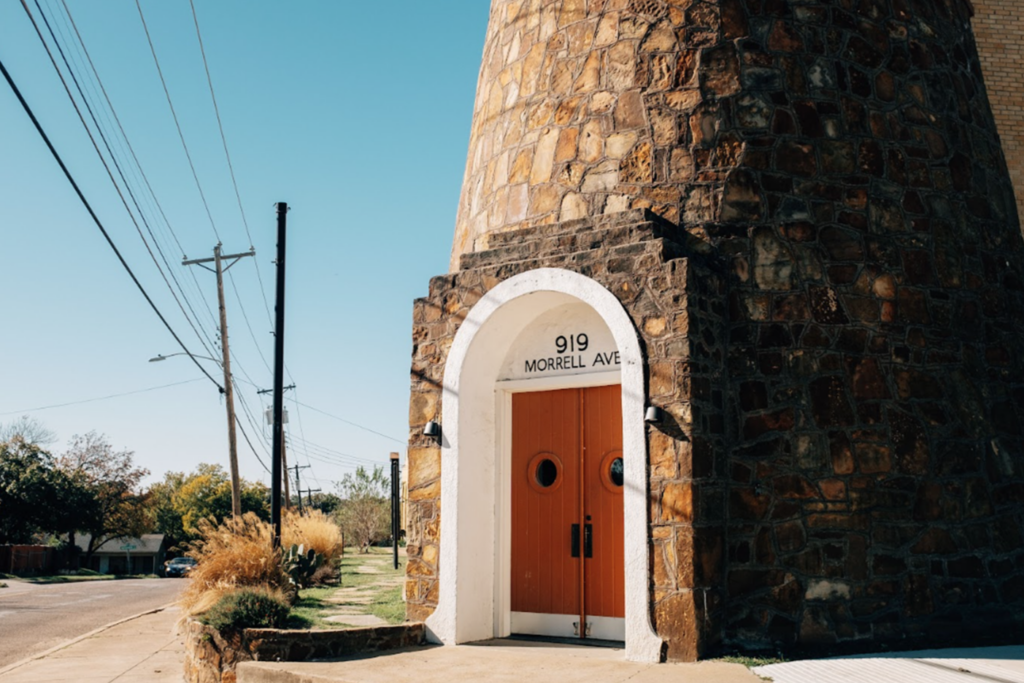
Proxy’s work spans churches, retail, industrial buildings, multifamily housing, and boutique hospitality, often preserving original structures while rethinking their use. Notable projects include Oak Cliff Assembly, a former church reimagined as a creative office and performance space; East Dock, a 62,000-square-foot industrial campus; and The Madison Hotel, a restored 1926 boutique hotel. Across its portfolio, the firm has completed or is developing more than 400,000 square feet.
Ramler’s approach emphasizes restraint over replacement—favoring adaptation of existing structures rather than ground-up construction. With in-house capabilities spanning acquisition through management, Proxy maintains long-term ownership and stewardship of its projects. The firm also operates affordable housing, reinforcing a commitment to economic accessibility.
His work is rooted in the belief that buildings should endure, not just physically, but culturally, serving as anchors for authentic, evolving communities.
Madalyn Melton: How did you end up in Oak Cliff?
AJ Ramler: I wish I could say it was some grand master plan, but really, it was a happy accident. I was invited to a fundraiser in an old warehouse here. It was diverse on both the ethnic and age fronts. It felt like a melting pot in all the right ways. It felt authentic, which has become unusual in Dallas. You can feel it in the air when a place isn’t pretending to be something else.
We came from Denton in 2012, which, like much of the metroplex, was different from the polished Denton we have today. Oak Cliff had the same feeling. We had been looking in Old East Dallas and other areas, but when we found Oak Cliff, it just clicked.
Oak Cliff is not immune to change, but it has held on to that diversity and authentic feeling. I still love working here. Almost everyone at Proxy lives in Oak Cliff. We don’t aspire to do projects elsewhere. Maybe we’ll sneak over to The Cedars, but part of what makes this work meaningful is being good neighbors, working in our own neighborhood.
MM: Your first project was your own home. What did that teach you about place, community, or your own ambition?
AR: It taught us everything. It was the best learning experience.
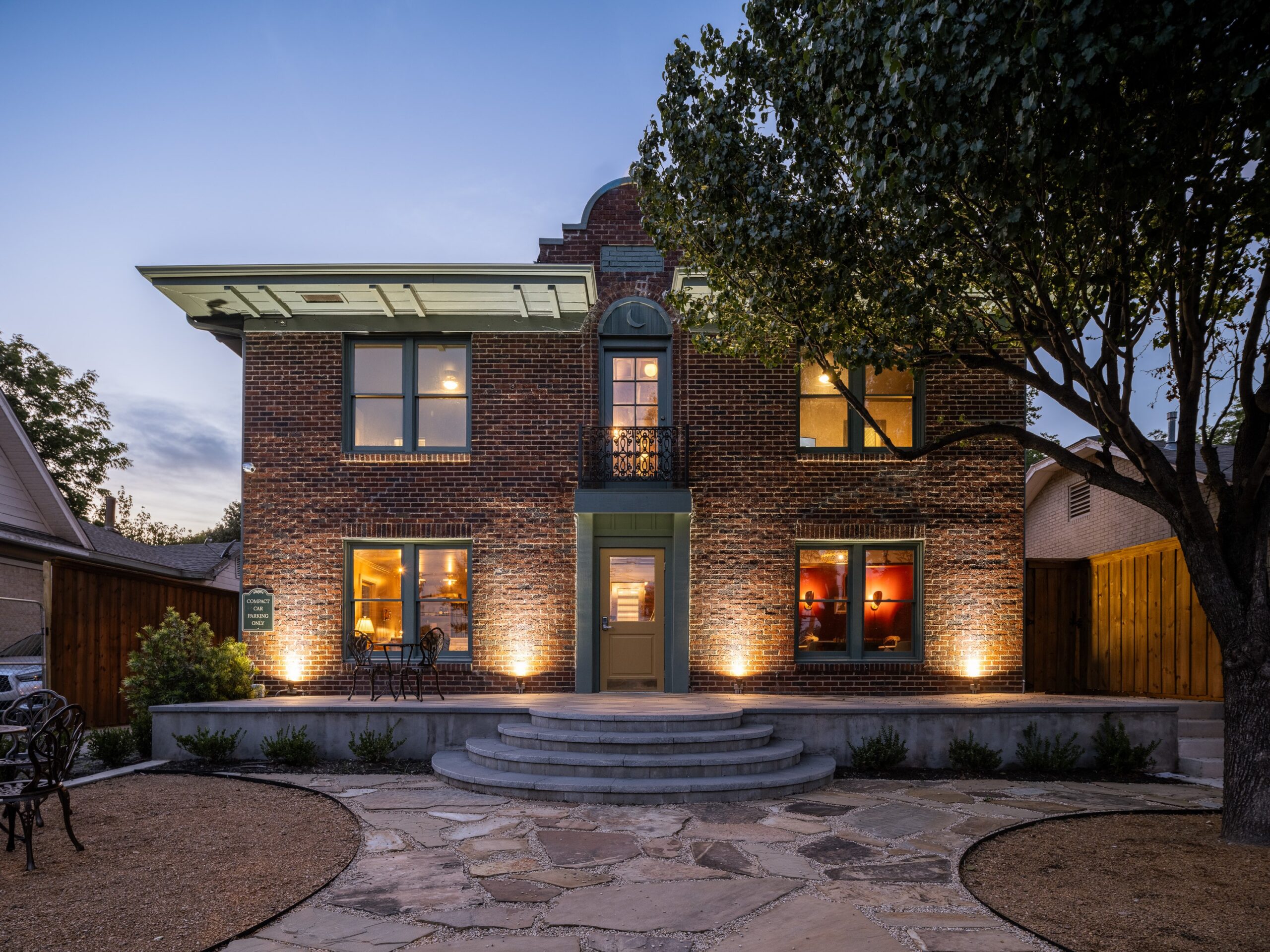
We were newly married and wanted to save as much as possible, so we planned to live in one unit of a small multifamily building. My now-business partner, Keith, and I went to look at it. It was perfect for a first project, though I didn’t know that at the time. It was a manor-style fourplex from the early 1920s with a full basement—very unusual for Dallas. It had long shotgun units, deep floor plates, a central corridor, hardwood floors, and high ceilings.
I lived in the basement. My wife stayed with her parents for a few weeks while I got the essentials working and built what I’d call a “kitchen.” I would go to work during the day, come home, and work on it at night.
It was one of the best seasons of my life. Friends moved into the upstairs units. We met neighbors. There was a communal backyard that became a gathering place. That chapter shaped everything.
MM: You have said you love geeking out about a property’s history. How does history inform what happens next?
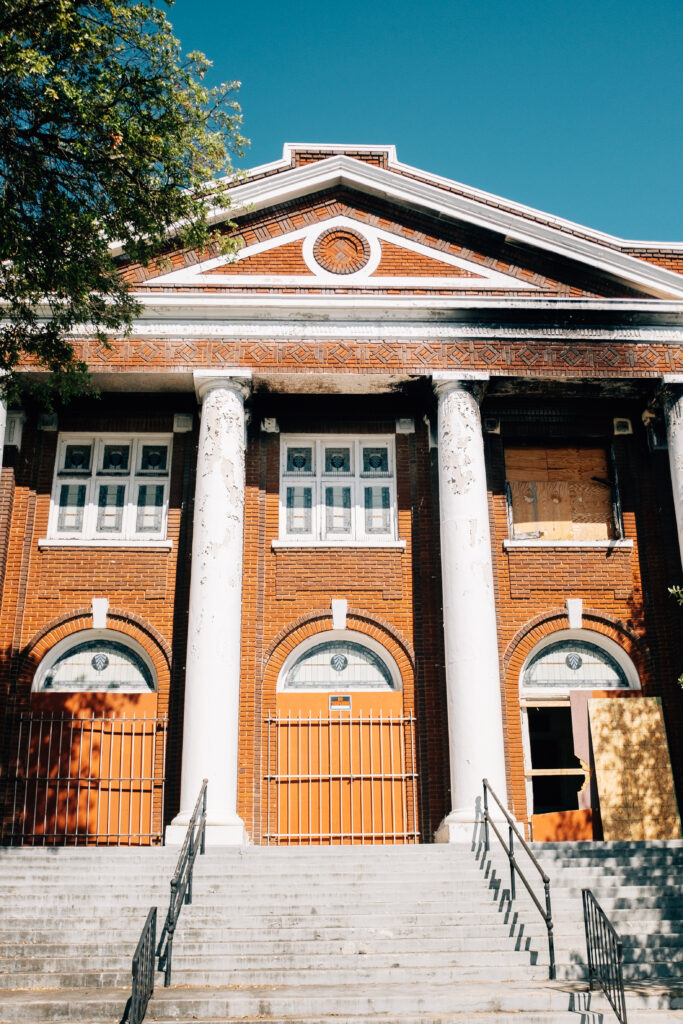
AR: I love learning about [a property’s] history, but it’s not always pretty. We don’t want to glorify segregation or injustice, but we don’t ignore it either. We want to learn from it. We are about to start on the Oak Cliff Methodist Church, built in 1915 at Jefferson Boulevard and Marsalis Avenue, the downtown of historic Oak Cliff. After annexation, that church was segregated. There was even a segregated water fountain across the street. There is nuance in the history.
Architecturally, these buildings are incredible. The reality is you can’t replicate these buildings today. Not economically. Not culturally. So if we lose them, we’re not just losing structures; we’re losing something that can’t be rebuilt. To build [these buildings] today would cost a fortune—the brick, the spans, the volumes. Now, these materials would be value-engineered out. Most projects get one “moment” if they’re lucky, so working on 100% brick buildings with tall ceilings and great windows is special.
But history rarely dictates the future use. If a building is vacant and blighted, it is usually because the original use no longer works. A church with a shrinking congregation or a warehouse without the right clear heights or loading, for example.
That’s what makes it fun. We are starting with a 6,000-square-foot sanctuary that can’t change because it is historic and asking: What now? It’s not easy, but that is the challenge.
MM: How do you balance preservation with making a building functional for today?
AR: Every project is different. We don’t have the luxury of building the same big-box product over and over. We start by identifying non-negotiables. What must stay? It could be a historic element. It could be a volume. It could just be something we love. At East Dock, there’s a 10,000-square-foot room we could have leased a hundred times if we had cut it up. We did not want to do that, so it stayed. Then we ask: Given the non-negotiables, what can this building become? We generate a few ideas, then go to the community, curious about what they want to see. Without those non-negotiables, you end up with something generic. Generic is easy to build, but it doesn’t create places people actually care about.
Sometimes we break ground, not fully knowing what a space like the sanctuary will be. We design in process. We try to listen to the building. Once we start, we begin to understand what the building needs, what to highlight, and what to fix.
MM: You involve the community heavily. Why is that important?
AR: As stewards of the space, we have to be genuinely curious. The odds of not disappointing someone are zero. So, we listen. We focus heavily within a one- or two-mile radius.
Even though the team lives here and feels like we know Oak Cliff, we’re still in our own bubbles. The projects work better when they’re shaped with the people who actually live around them. That’s not philosophical—it’s practical. Top-down ideas miss things the neighborhood sees immediately. East Dock had different feedback than Oak Cliff Assembly. Jefferson had different feedback. It always shapes the outcome.
These projects are hard. If they fail, we’re failing the neighborhood too. It’s all connected.
MM: There is a lot of tension in Dallas right now between preservation and development. How do you navigate that?
AR: I think that tension is healthy. It pushes everyone to do better.
We don’t try to convince neighbors of anything. We try to be open about what needs to happen to make a project work financially, structurally, and politically. With neighbors, it’s a conversation. Change is one of the hardest things a community confronts. I encourage people to get involved in neighborhood associations. Get educated. There is a huge disconnect between affordability and development that we can have a voice in.
If we don’t proactively make space for more people, we will have an affordability crisis. We also need the right kind of housing, not just 4,500-square-foot houses. The missing middle matters. Quadplexes matter. It’s complex. There are smart people on every side. The best thing we can do is keep talking and let that tension guide better development.
MM: What are the biggest challenges in adaptive reuse?
AR: For a long time, it was parking. The city has taken steps with parking reform, which is great. Sometimes, it’s banks. I need to convince the banks that there is merit to these projects [for the community and for them]. That’s a real challenge.
There are always constraints within construction. The Methodist church has seven level changes across three floors. It has three staircases from the balcony that don’t count for egress. It’s historic, so we can’t just drop a steel stair in the middle. ADA, code requirements, energy inefficiency from stained glass—it all adds up.
There are only a handful of potential uses for a raked sanctuary floor with huge volumes and limited parking. For our hero spaces, we want public access. We are looking for a retail tenant who wants a historic sanctuary and is okay with 40 dedicated parking spots. That’s a specific person.
We talk to everyone. I’ll bring a hundred people through a space before we land on something. Most are not tenants, just people with insight. Eventually, we whittle it down to what works.
MM: For someone who wants to get involved in community advocacy, where should they start?
AR: Start by understanding the positions, even when they contradict each other. There are good, educated groups arguing for more apartments and others arguing for fewer. Some say apartments raise home values; others say they lower them.
Stay informed. Listen to podcasts. Follow local planning conversations. Go to neighborhood meetings. Show up when developers host engagement events. Go to city council meetings—they’re long, but you will learn a lot. There are many moving pieces, but showing up is a good first step.
MM: What story do you hope East Dock tells in a year? In ten?
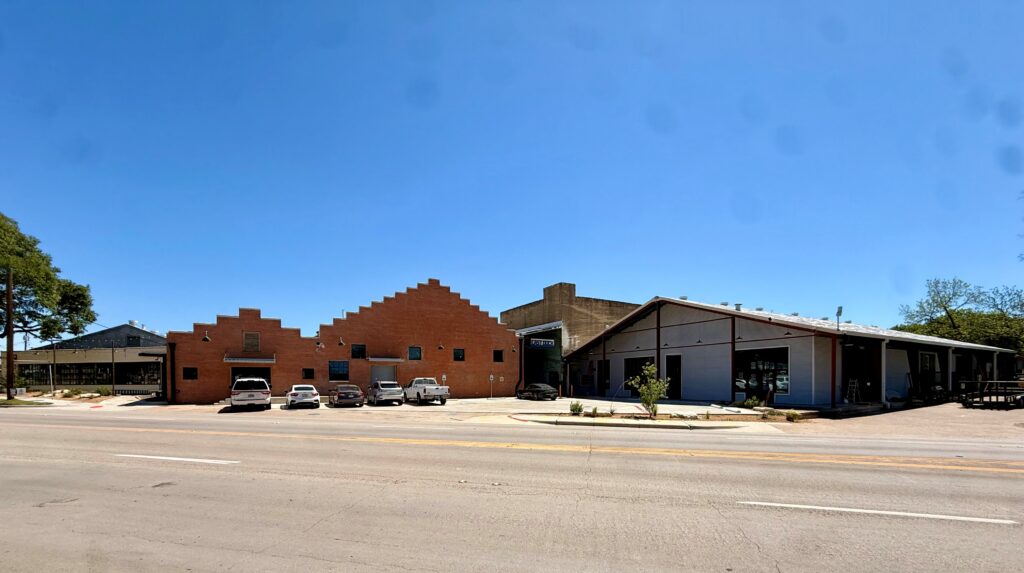
AR: When we first saw it, we thought: What do we do with this thing? We had 62,000 square feet on a curved street, sitting at an angle, right up on the sidewalk. It’s in a part of Oak Cliff many people don’t even know exists.
We decided early that we wanted it to be an 18-hour campus open from 6 a.m. to midnight, seven days a week. That guided leasing.
Architecturally, we stripped back the single paint color to reveal the individual buildings while keeping cohesion. Getting light into the center was a big challenge. We used skylights, synthetic materials, and creative solutions on a small budget. Now there is light everywhere.
East Dock was experimental. We are testing what can happen on a large-scale, off-the-beaten-path property. I think the city will look back and say this was some of the best economic development money spent in recent years. It’s $2.7 million invested compared to $30 million in incentives for standard apartment complexes.
It’s about showing that cultural preservation and economic development can work together and have a bigger community impact.
MM: What has been your biggest lesson?
AR: I needed so much support. We now have David to handle construction; Haley to activate spaces with the community; great architecture partners; and, of course, Keith, my business partner. I enjoy this work, but I’m not good at all of it. With the team, it’s not that scary. It’s an adventure.
MM: Looking ahead, what excites you most?
AR: Projects like these can shift the tone [of a neighborhood]. They can preserve culture, add housing, and strengthen neighborhoods at the same time. There are so many big buildings that need to be done. I hope more people come alongside us and do this work, both in Oak Cliff and elsewhere. I think people are starting to realize that the places that last aren’t the ones engineered to be impressive—they’re the ones that feel real. That’s what we’re chasing. That’s what excites me.
This interview has been edited for clarity and brevity.