Exploring the Illumination of Light in Design
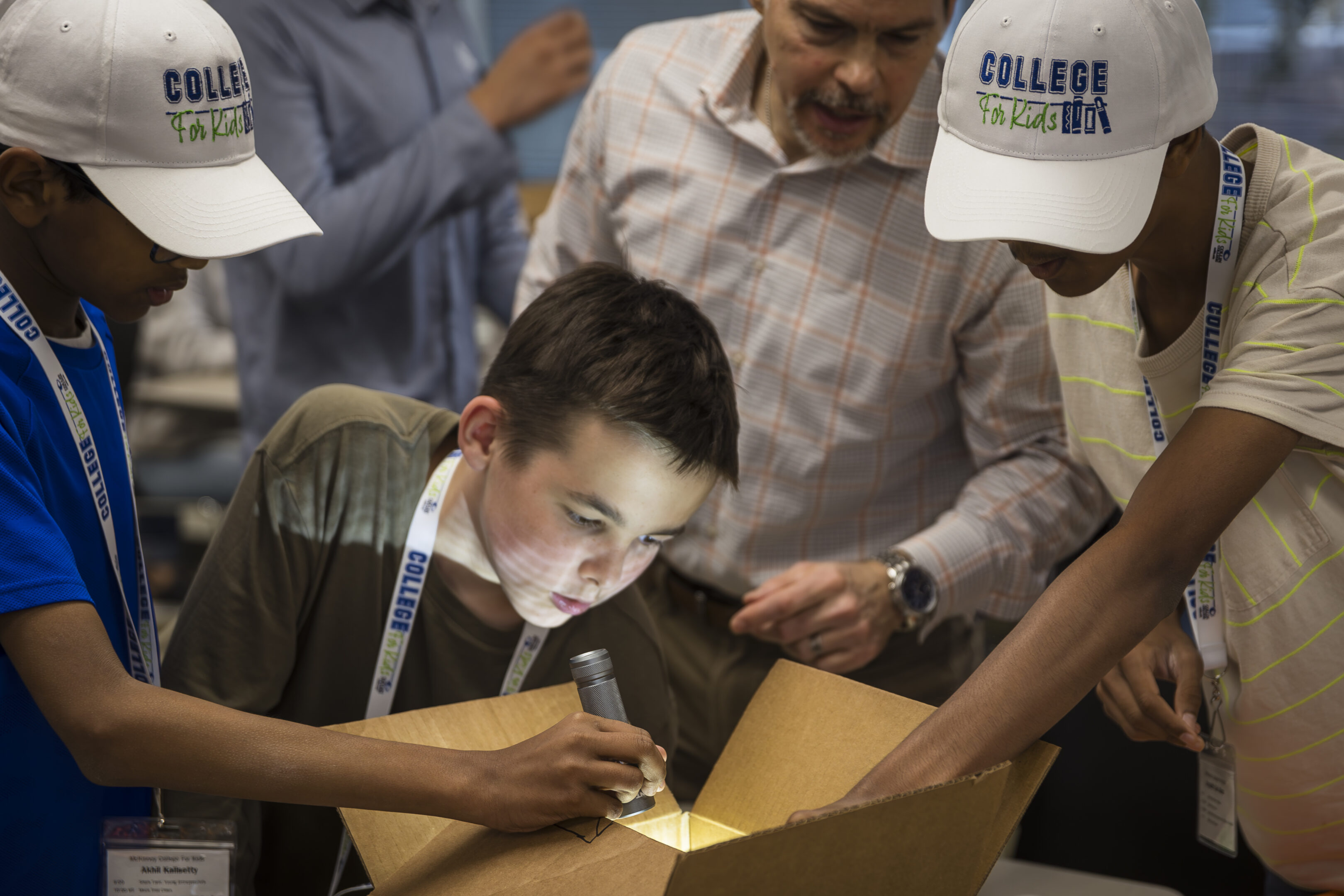 Image by Griff Servati
Light shapes how we learn, work, and interact. It supports focus and comfort while quietly influencing emotional well-being. Beyond illumination, light reveals texture, defines form, and establishes rhythm within a space. In learning environments, its presence can elevate attention, create a sense of calm or energy, and connect students more meaningfully to their surroundings. Recognizing this connection between design and human experience, WRA Architects, in collaboration with Mohawk, Furniture Marketing Group, and the Architectural Lighting Alliance, brought the conversation of light to Collin College’s “College for Kids” summer program, encouraging students to see the built environment with greater awareness and intention.
Titled “Exploring the Illumination of Light in Design”, the two-day workshop introduced middle school students at the Wylie and McKinney campuses to architecture and interior design through the lens of lighting and demonstrated how light shapes space, emotion, and connection within the built environment. The success of this program emphasized the importance of education, community engagement, mentorship, and investment in young learners to strengthen both the future of the profession and the practice of design itself.
Design, History, and Light
In the summer of 2025, more than 20 students participated in guided discussions, hands-on experiments, and collaborative design exercises and explored the relationship between light, material, and spatial experience.
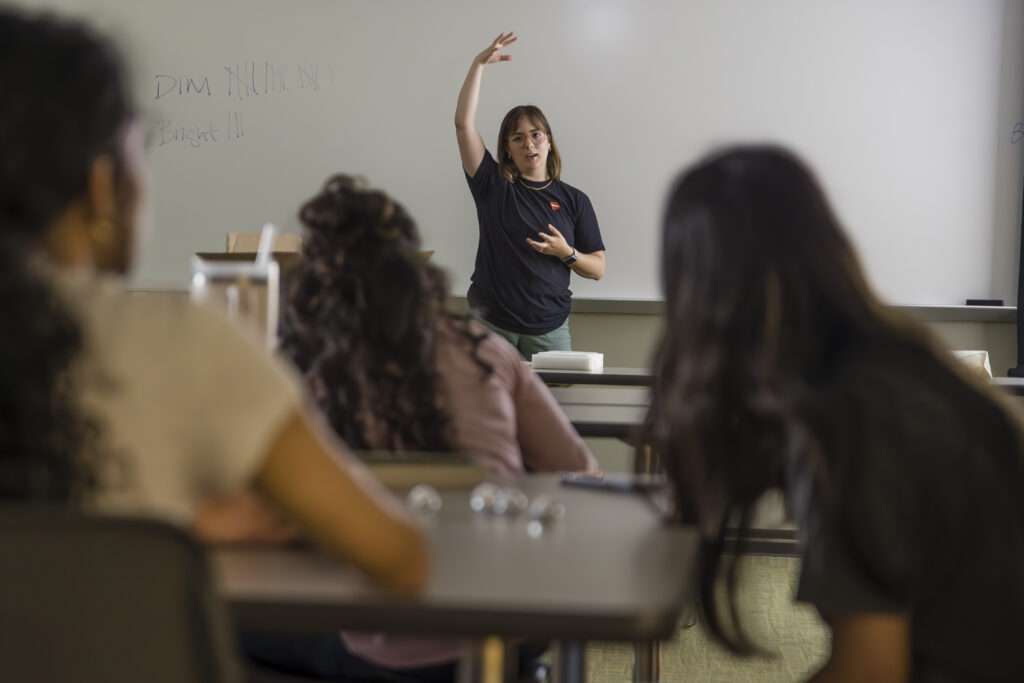
On the first day of the workshop, Jennifer Spring, the sustainability director of WRA, introduced students to the fundamentals of architecture and interior design through an interactive discussion. Students explored how light was used in ancient architecture, including how pre-modern buildings were carefully crafted to capture daylight from different directions, create rhythm, and communicate meaning long before electric lighting existed.
I, Maryam Emadi, shared examples from Iranian historical architecture, illustrating how designers innovatively brought light deep into buildings through techniques such as mirror work, colored glass, geometric plaster patterns, and reflective surfaces, transforming daylight into layered, dynamic atmospheres. These strategies demonstrated how solar orientation, materiality, and spatial sequencing were intentionally combined to evoke wonder and emotional in traditional Iranian buildings, creating a strong bridge between tradition and contemporary practice.
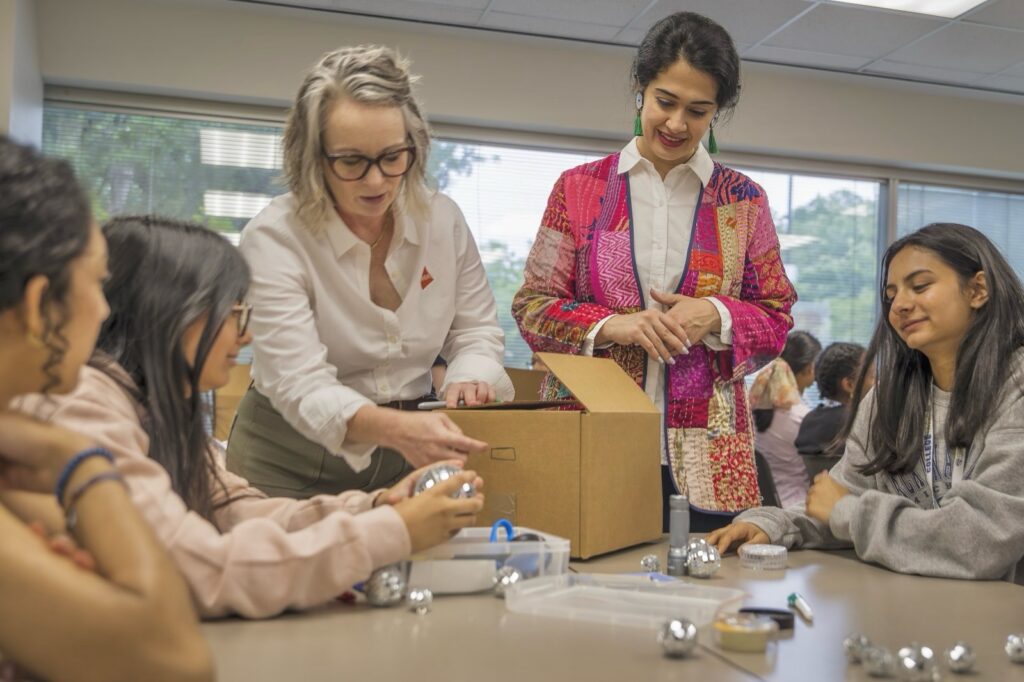
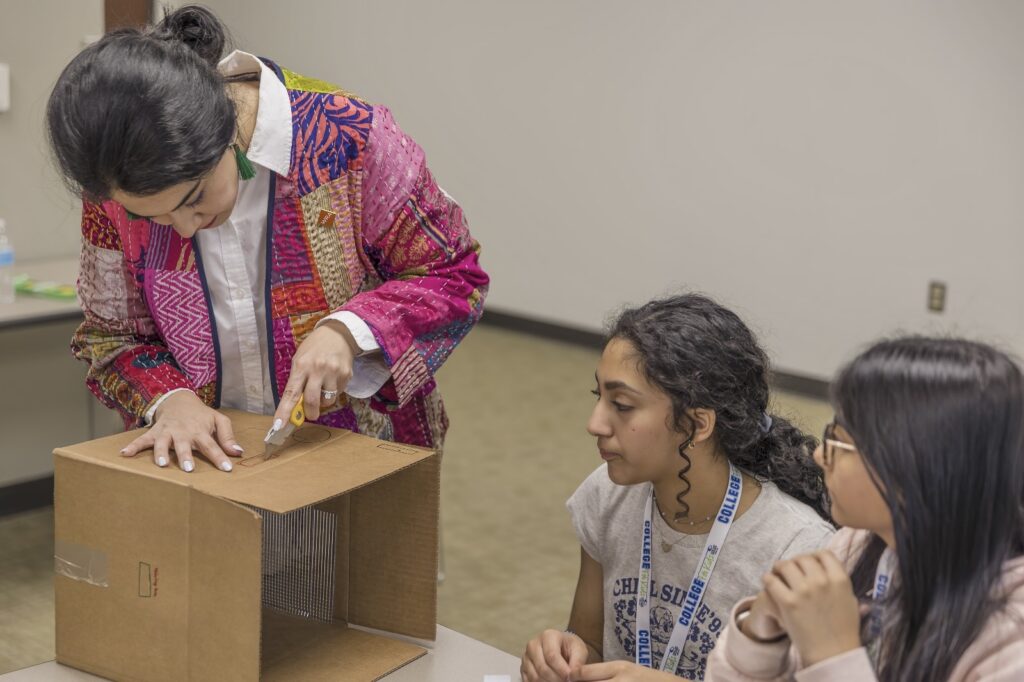
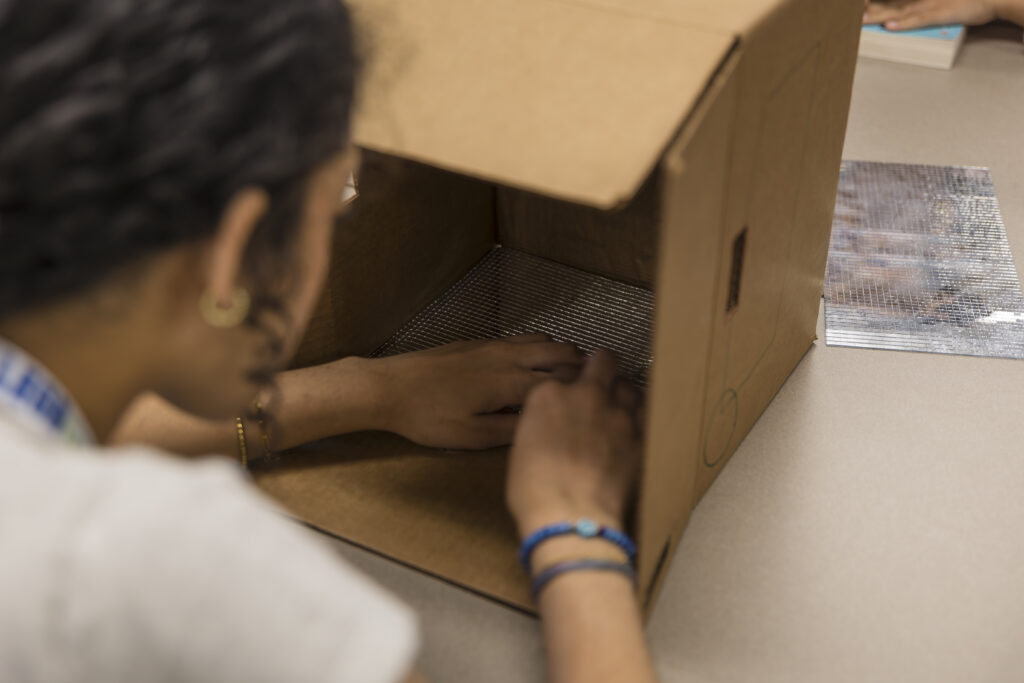
Sarah Harris guided students through a structured brainstorming process using light boxes and provided materials, encouraging them to explore how light behaves within enclosed forms.
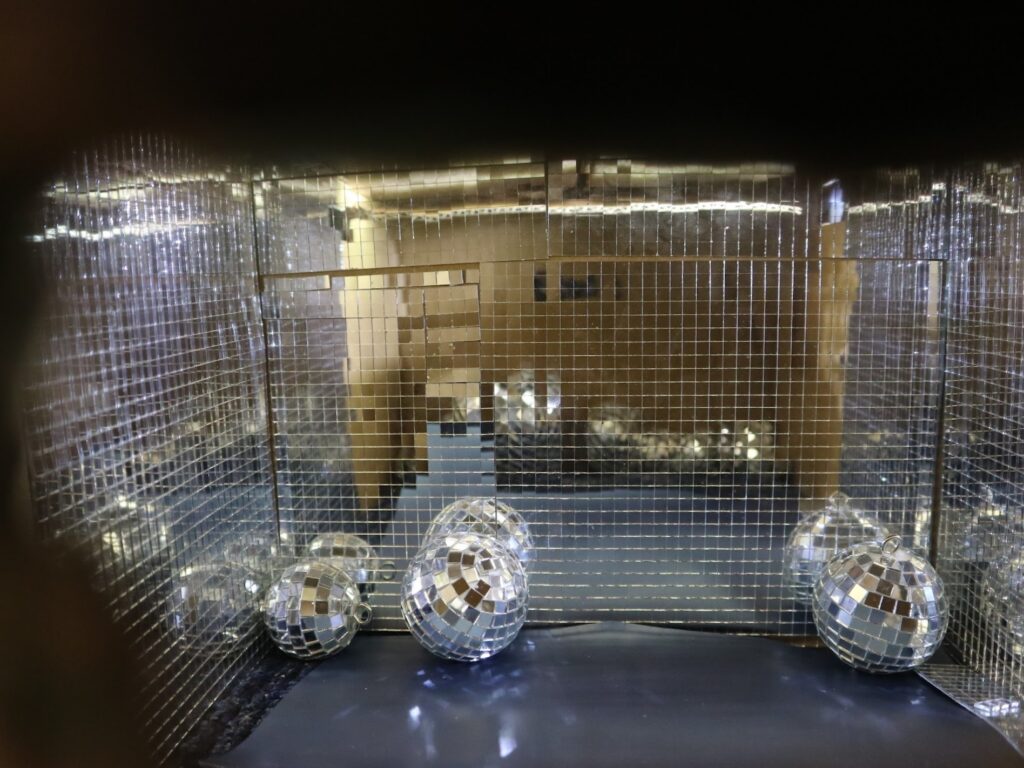
Over the two-day workshop, students used these light boxes to study spatial experience at a small scale through a step-by-step design process using flashlights to simulate natural and artificial lighting. By experimenting with side lighting, filtered lighting, and top lighting through openings, seams, and corners, the students observed how light direction and entry points influence brightness, shadow, and atmosphere.
Material, Color, and Application
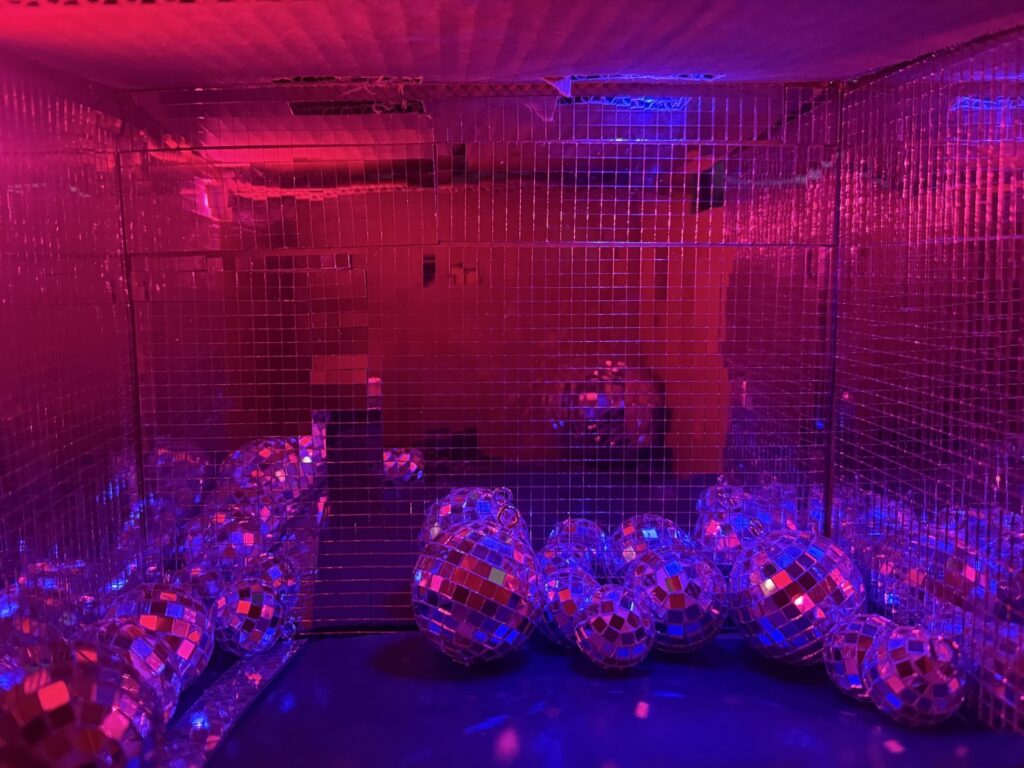
The second day shifted to form and material exploration. Students introduced interior elements into their boxes and examined how light interacts with form under direct, reflective, and ambient conditions. By testing materials such as mirror tiles, disco balls, carpet, and other finishes, they observed how light reflects, diffuses, and transforms based on surface quality and placement, deepening their understanding of how light and material work together to shape spatial experience.
Building on this work, Andrew Casillas, architectural staff at WRA, introduced students to lighting design by color temperature and its impact on mood, material appearance, and spatial perception. Students experimented with colored light filters, observing how shifts in color transformed atmosphere and redefined spatial character.
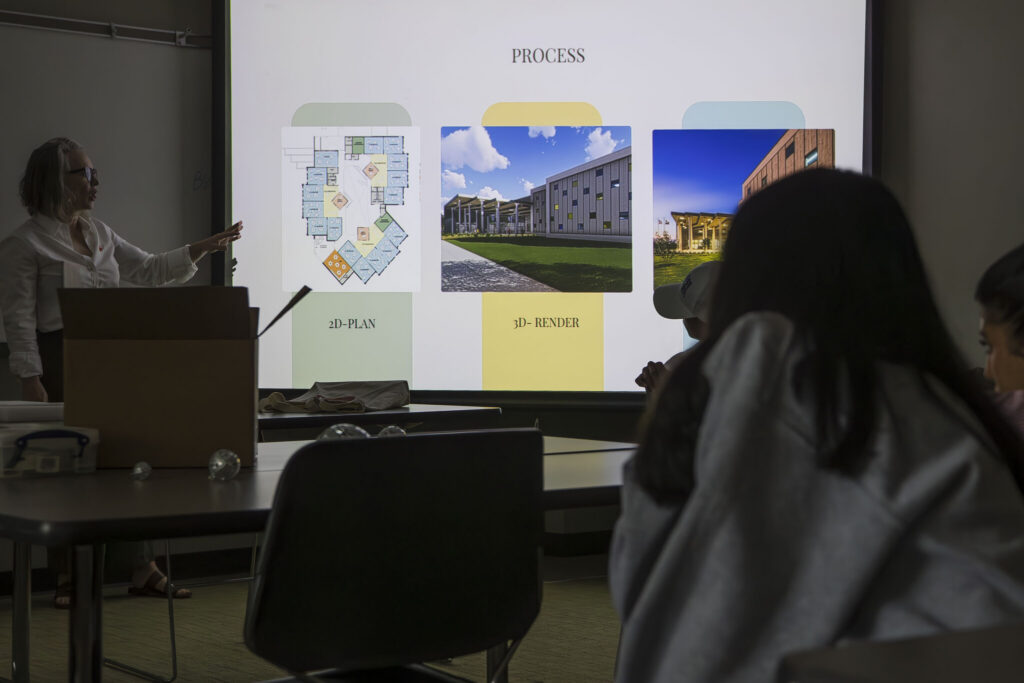
Tim Filesi from the Architectural Lighting Alliance expanded the discussion by connecting these small-scale experiments to real-world applications. Through built project examples, students were able to see how similar lighting strategies are applied at full scale, reinforcing the relationship between lighting design, architecture, and human experience.
At the end of the day, the students gathered to share their light box designs with other teams, reflecting on what they had learned about light direction, material, color, and atmosphere. Through this collaborative exchange, the students learned from one another while reinforcing the creative and analytical thinking introduced throughout the workshop.
As they experimented with direction, intensity, and color, the students were able to articulate how light affected their mood, focus, and comfort, often describing feelings before technical qualities. Their responses served as an important reminder that while professionals frequently approach lighting through performance metrics, energy codes, and technical standards, users experience light emotionally first. Engaging with middle school students became not only an opportunity for architects to teach architectural principles, but also a reciprocal exchange that helped designers better understand what future generations value in the spaces they inhabit.