23Springs
 Rendering by GFF Design
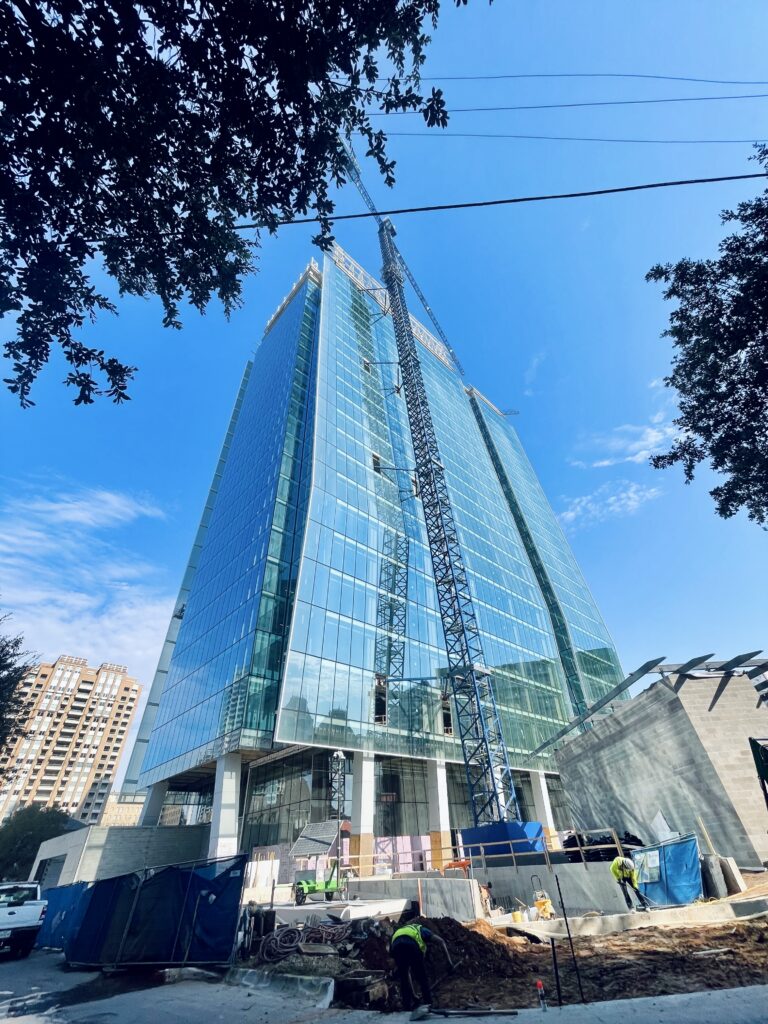
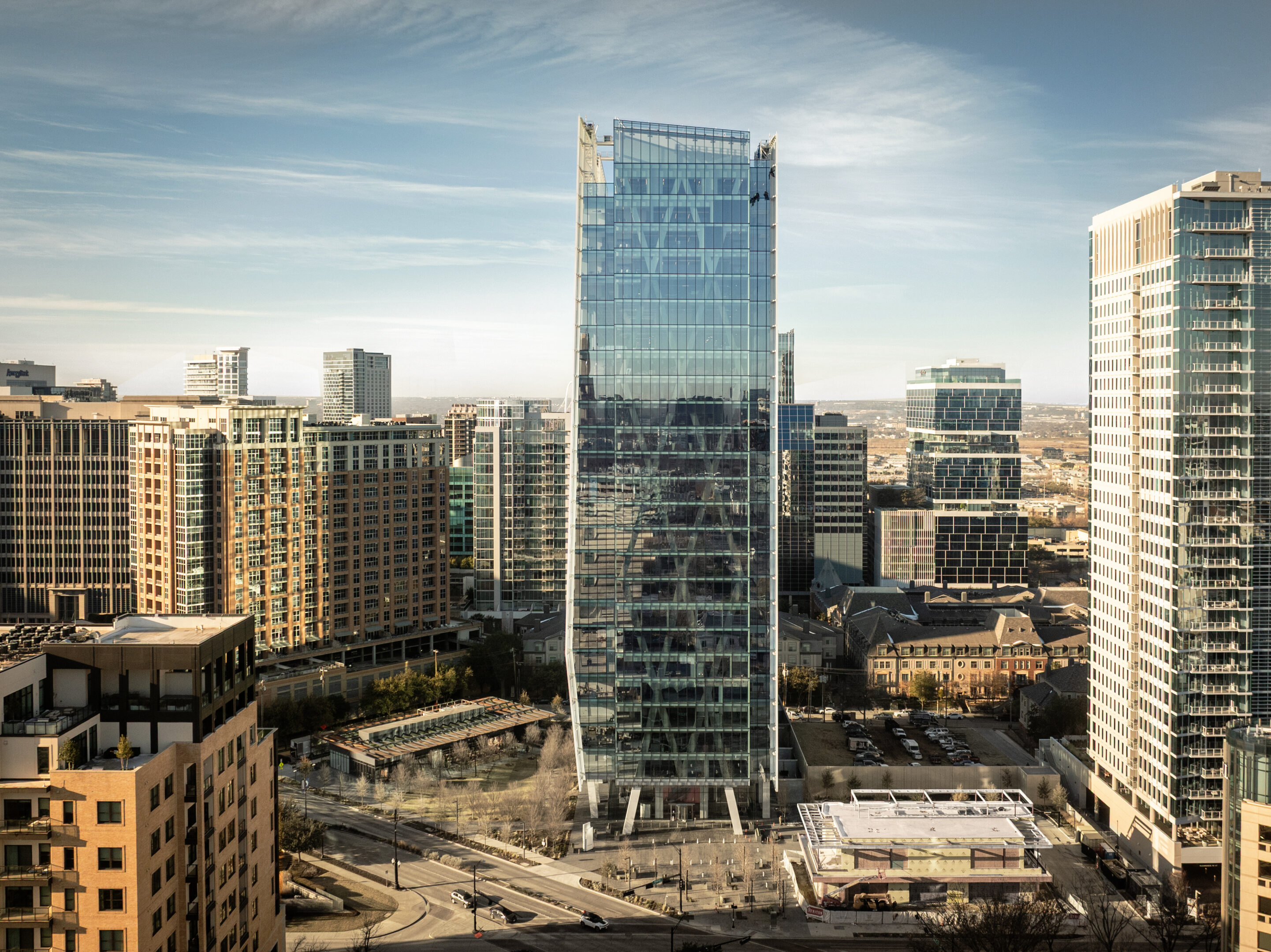
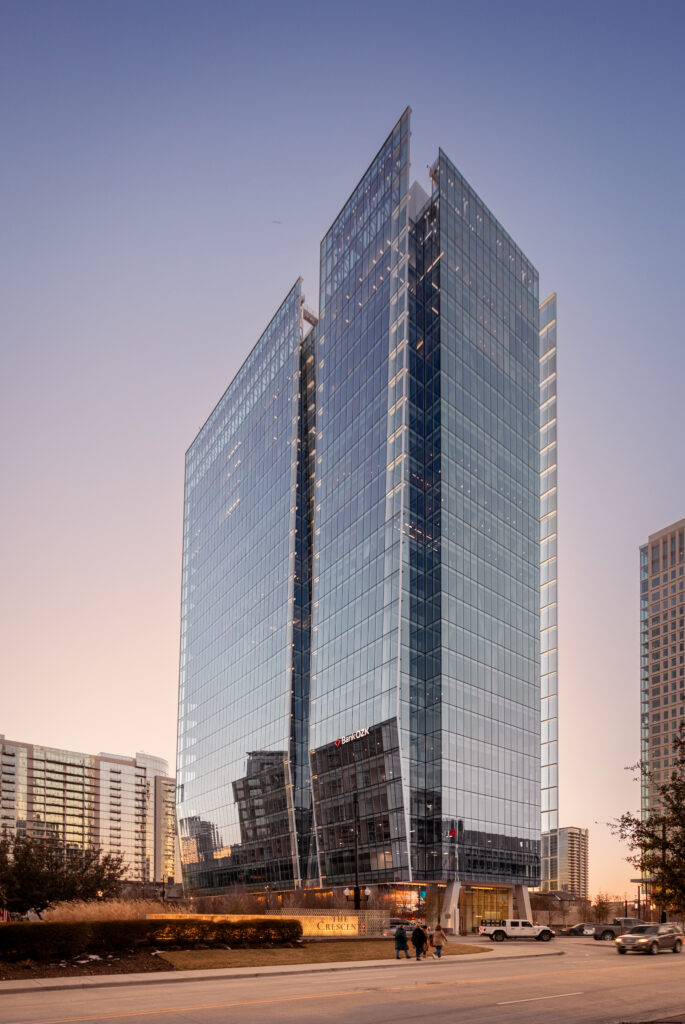
Rising at the intersection of Maple Avenue and Cedar Springs Road, 23Springs is Uptown’s newest office tower. Developed by Granite Properties in partnership with Highwoods Properties and designed by GFF Design, the 26-story, 625,000-square-foot Class-AA office tower is complemented by two freestanding restaurant buildings and a half-acre neighborhood park. The project has transformed the former site of three class B low-rise office buildings into a vibrant, walkable destination and a focal point for business and leisure.
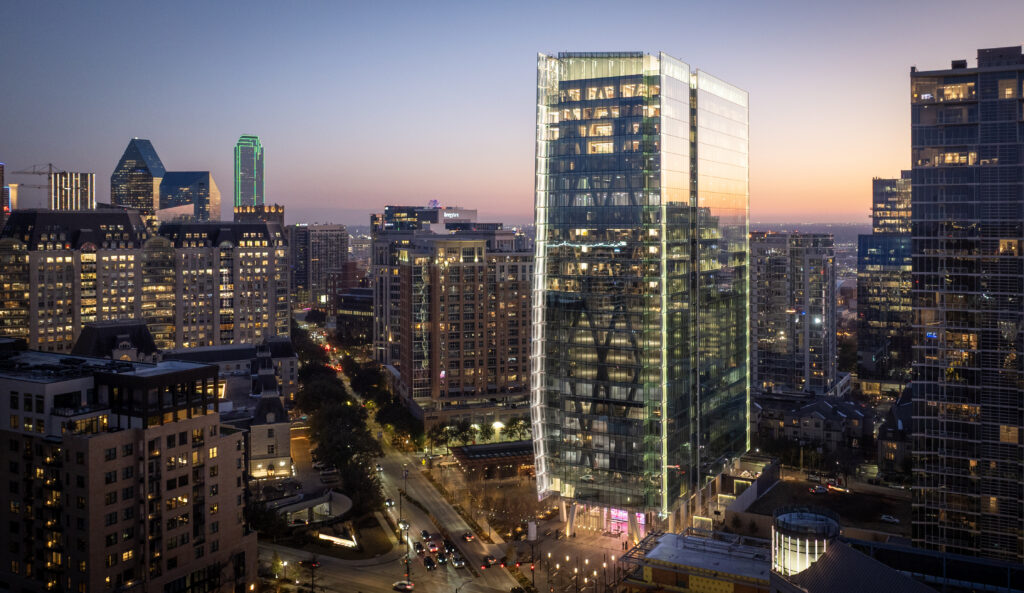
Designed as architecturally distinctive and responsive to its urban context, 23Springs balances density with openness. The development prioritizes green space, pedestrian experience, and street-level activation, pushing parking below grade and situating the tower back from the street frontage. The elegant, light-filled office tower positions itself as a landmark, and the building’s defining x-columns create an identifiable presence on the Uptown skyline. The recognizable motif echoes throughout the interior design of the shared amenity spaces and even into the 23Springs marketing materials.
“We always saw the x-columns as a design opportunity,” recalls Maria Gomez, principal-in-charge for GFF Design. “Rather than defaulting to conventional vertical columns, the team looked for ways to use the building’s structural system to do more and to express the architecture. The x-columns allowed us to take something purely functional and push it beyond the typical, turning structure into a defining design element.”
Prior to its redevelopment, the site contained approximately 110,000 square feet of office space in a mixture of three- and four-story buildings. Granite Properties believed this location demanded an iconic, community-focused building with greater density and sought to expand the site’s capacity. The vision included 650,000 square feet of office space and restaurant buildings with a 6:1 floor-to-area ratio—which required a zoning change. In 2017, GFF Design began the schematic design that would be presented to the Oak Lawn Committee, the City Plan Commission, and ultimately the City Council, which demonstrated the denser development of the site.
Several design features helped the project move smoothly through the zoning process, including underground parking, which allowed for highly visible green space, freestanding restaurant buildings, and a walkable streetscape as new neighborhood amenities.
“We included several features in that schematic design that would reinforce the perception of a slender tower,” says Gomez. The inflected southeastern façade and the extended 10-foot curtainwall fly-bys at each corner enhance the slender silhouette. The structural x-columns draw the eye upward. Visually, the increase in square footage would not overwhelm the neighborhood.
Aaron Bidne, senior director of development for Granite Properties, also noted that the identifiable x-columns allow for column-free corner offices. “We quickly saw the strategic leasing benefit of these columns, which would allow multiple floors to maintain 360-degree open views of Uptown and Downtown Dallas.”
The architectural design solidified and Granite Properties on board, GFF Design presented to the Oak Lawn Committee in 2018 and received unanimous approval for the zoning change by the OLC, Plan Commission, and Dallas City Council.
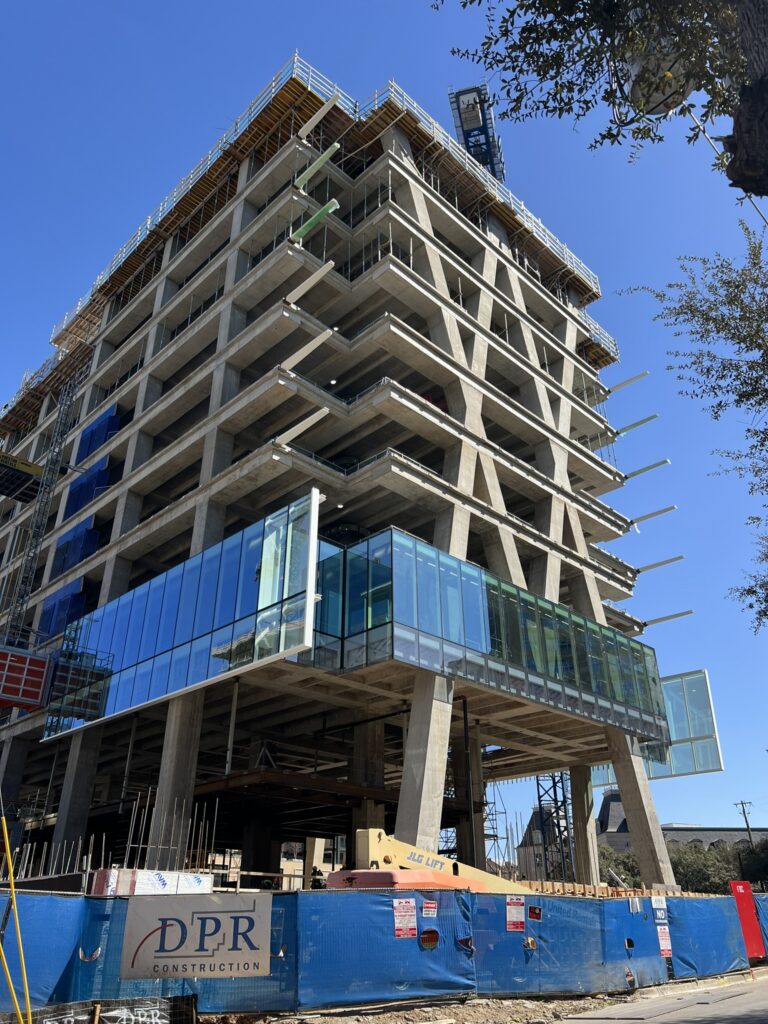
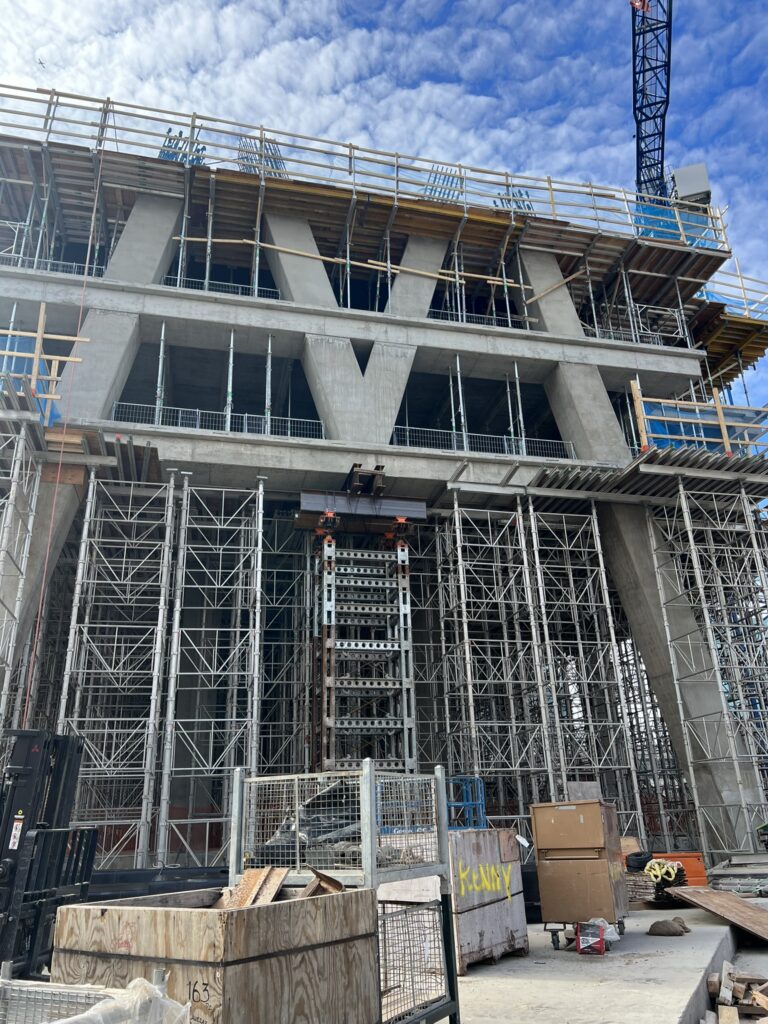
With the zoning change completed, L.A. Fuess Partners considered the structural elements that had also become a design feature. One notable revision moved the origin of the x-columns to level one instead of level three. Caleb Duncan, president of L.A. Fuess, remembers, “It was a huge success to extend and begin that geometry at the ground level. It draws the eye to the interesting framing, which might be undetected otherwise.” The design team maintained the main entry’s functionality as a vehicular drop-off point and the primary pedestrian door with a 55-foot span between the columns. “Importantly, starting the columns at the first level also allows the lateral forces gathered up in the x-columns to be resolved down to the ground plane,” says Duncan. The x-columns were shaping up, both architecturally and structurally.
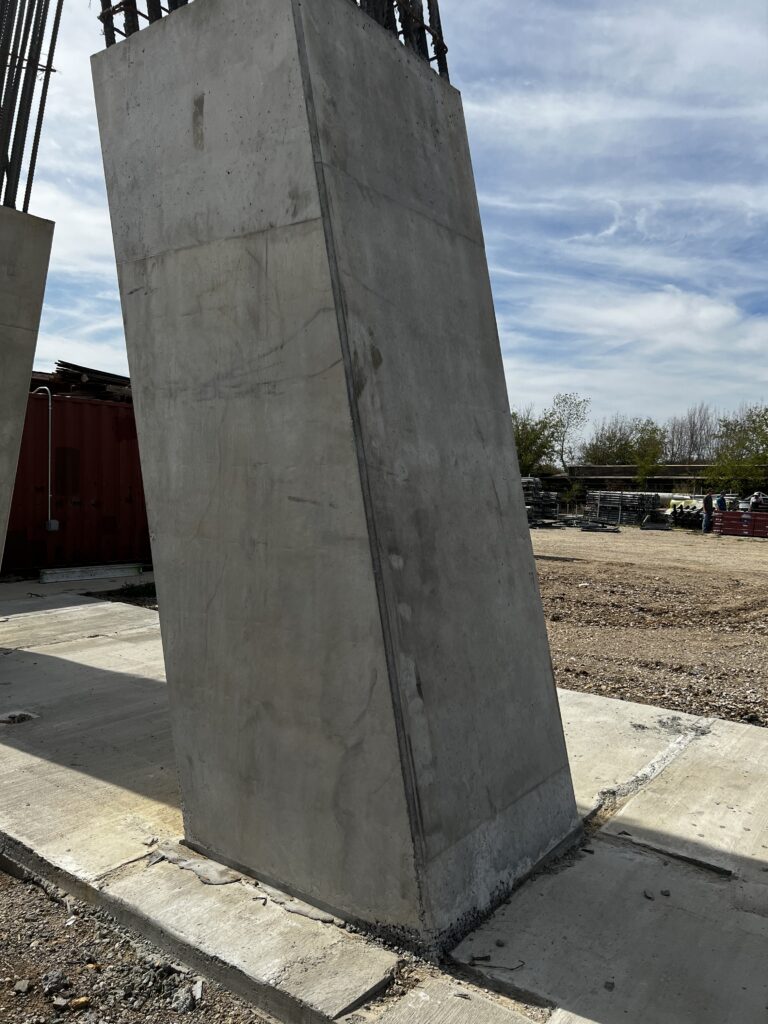
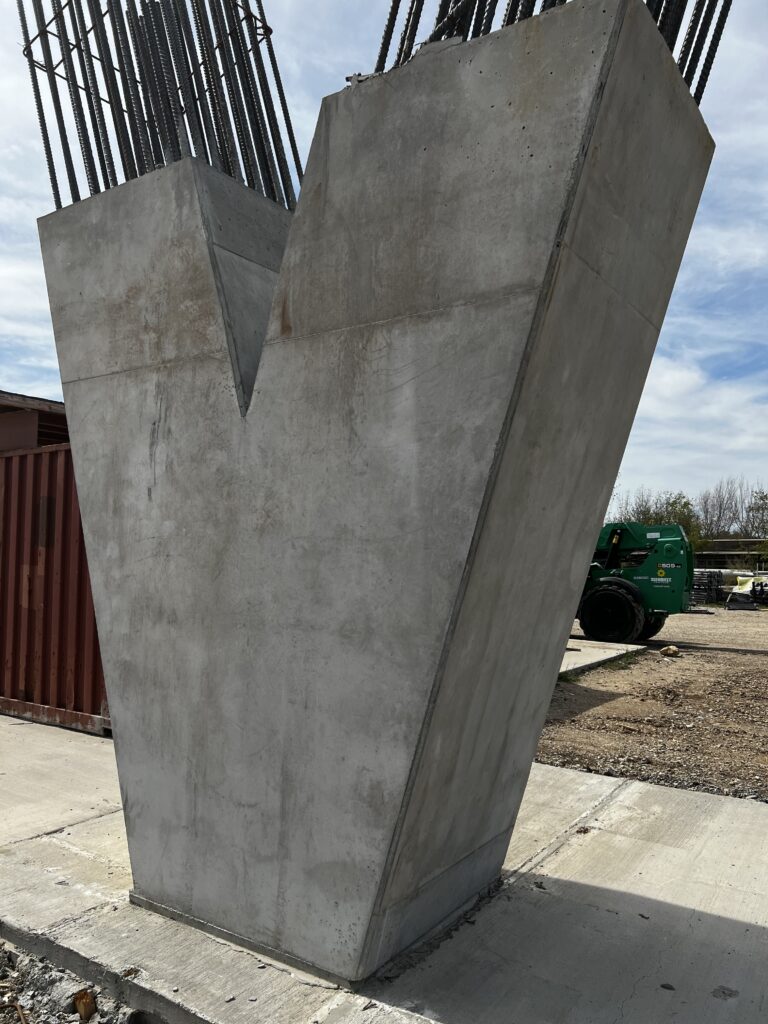
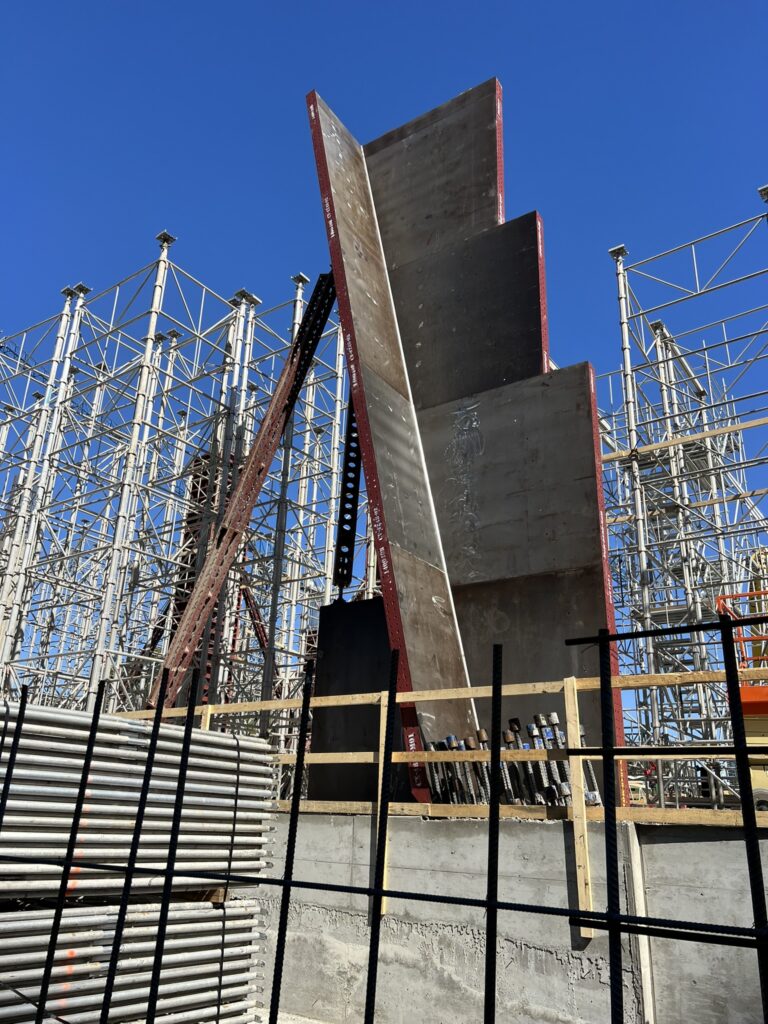
In 2019, the design team began construction documents. Granite brought on DPR Construction as the general contractor, and the team collaborated on how to execute the x-columns. The mock-up was the first test, not only to confirm the aesthetics but also the constructability. The team carefully reviewed the formwork joint locations, the Class A finishing of the concrete, and the methods to consolidate the concrete at the lowest portions of the columns. Todd Toupal, the project architect, recalls his amazement “seeing the x-column mock-up and grasping the size and scale of the structure for the first time after all those years of design.”
However, the inherent angular design created certain realities for the formwork and constructability. The design and construction team had to create a formwork template that could be used in all conditions. Although this created different visible joints, it still enabled an efficient classic column that met the aesthetic goals of the design.
The crossing point of the lowest X shape landed at level three, presenting an additional challenge. While the continuation of the legs created a wide and open entry to the double-height lobby from the ground level, the middle portion had to be supported by a massive temporary shoring until more of the structure above was completed. As explained by Chris Matthews, principal at L.A. Fuess, “The shoring had to remain in place until enough structure above was complete in order to allow the completed concrete truss to the two continuing columns.” This shoring stayed under the intersection for months until the concrete structure above was sufficiently completed.
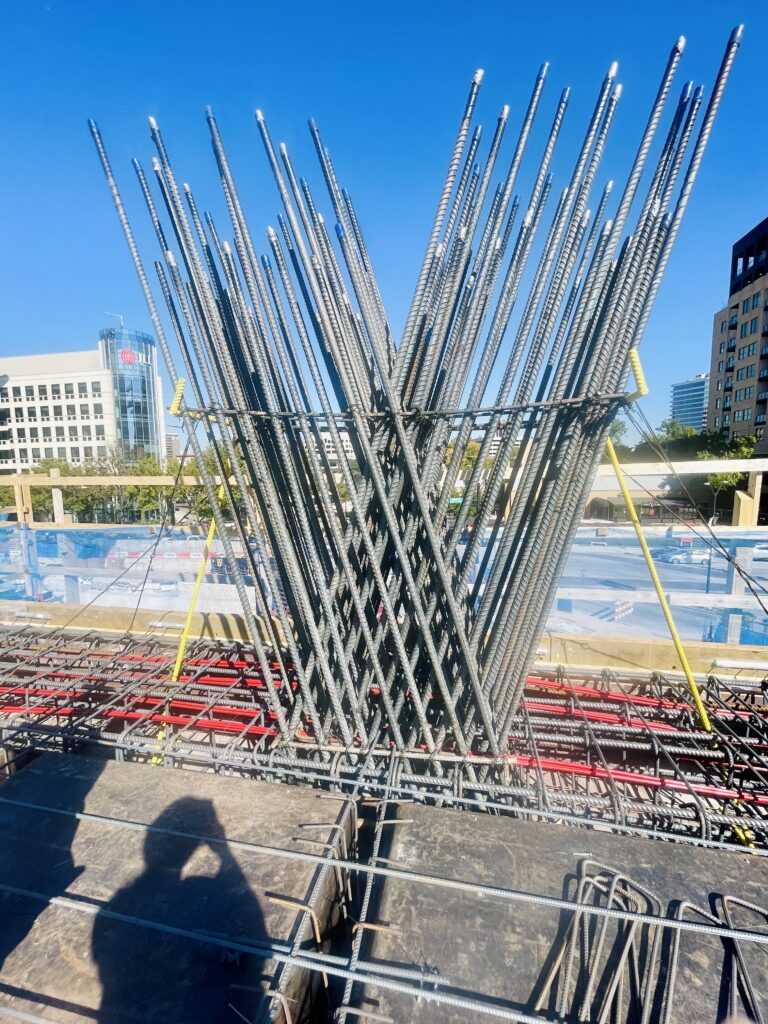
L.A. Fuess also paid special attention to the inside of the x-columns. “We worked hand in hand with DPR—who fully modeled all the rebar—to make sure the reinforcing could be installed without conflict,” adds Matthews. Using mechanical couplers reduced rebar construction otherwise caused by traditional splices. To ensure careful coordination and design, the column reinforcing alone required over 20 submittals.
Due to each floor’s integration with the structure, every level eventually took on a unique personality. Level six is the “bowtie” floor—the only time when the two columns intersect at mid-level. Some levels have a single V, while other levels provide unencumbered corner views with a twin pair of inverted Vs toward the center. These dynamic vertical volumes created numerous, distinct interior spaces with various uses depending on a tenant’s needs or interpretation of the space—a special meeting space, a cozy conversation nook, or an activated creative space.
The intertwined geometry of the x-columns is the result of more than a decade of design iteration and execution, but its impact extends well beyond structure alone. As 23Springs becomes a defining presence on the Uptown skyline, the x-columns remain central to that vision—simultaneously shaping the building’s form, enabling its performance, and expressing its identity. What began as a structural solution ultimately reinforces the project’s core ambition to elevate the workplace experience while creating a landmark that is both architecturally distinctive and deeply connected to its urban context.