Can We Shoot the Rendering?
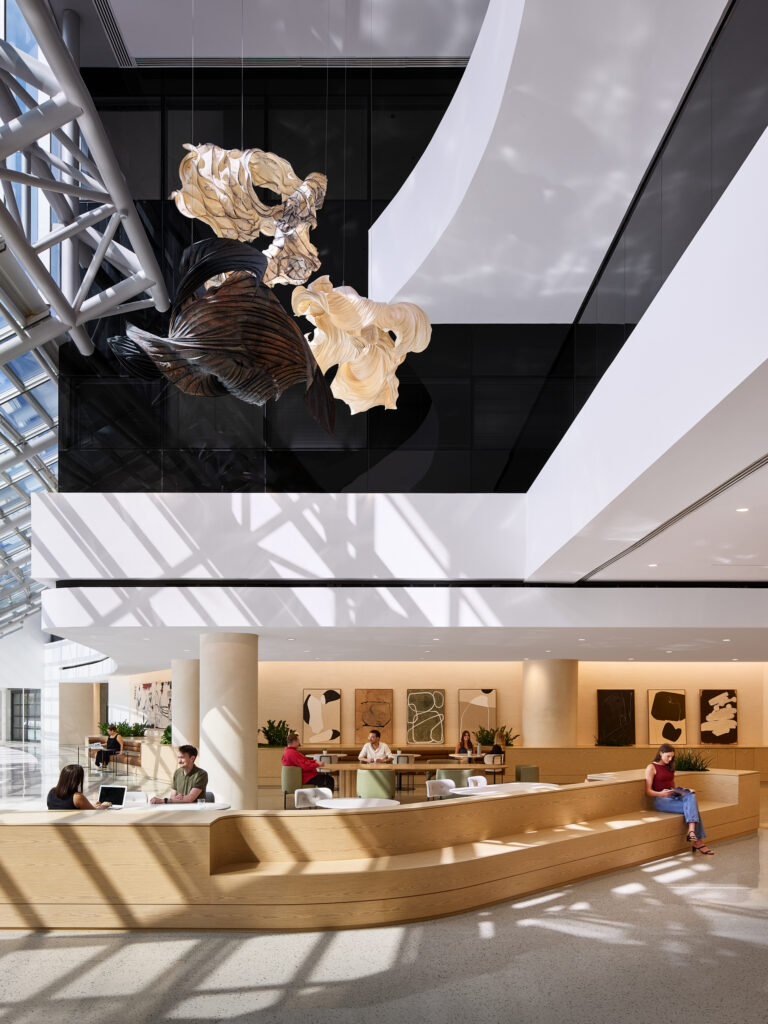
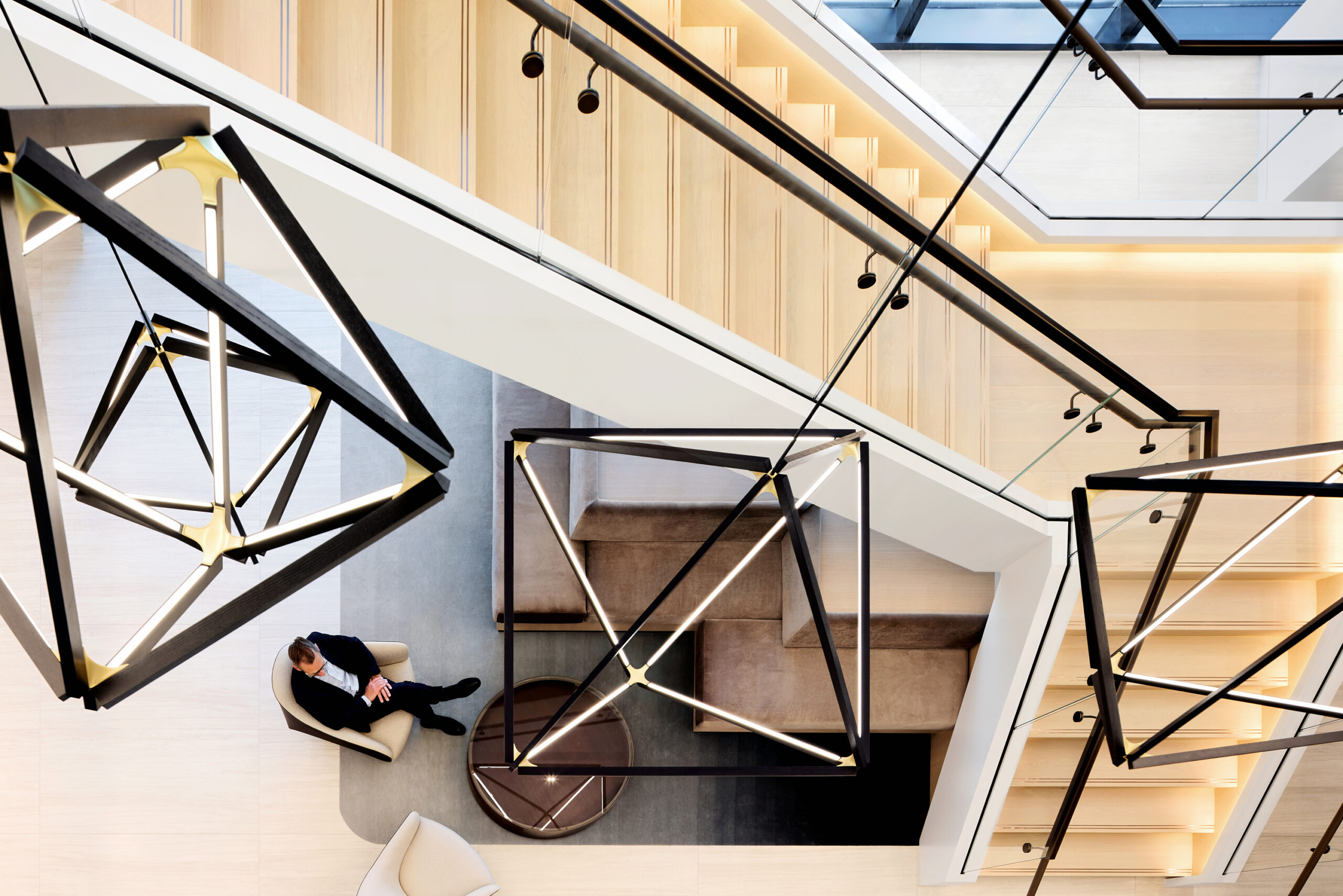 Paul Hastings Houston, captured for Genser by Stephen Walsh, RW Collective
Ok…this one might be a little contentious. If you’re the non-collaborative type, now would be a good time to stop reading and find a cozy, solitary corner to curl up in your black cape to read Fountainhead again. Having been a design director in a past life, I can say this a little tongue in cheek, especially given that a few of my peers had taken to calling me “Miranda” during the latter part of my design career.
“So, what’s contentious,” you ask, “about shooting the rendering?”
You may not realize it, but “can we shoot the rendering?” is likely your favorite photographer’s least favorite phrase. I asked this question to some of the industry’s most decorated architectural photographers from the American Society of Media Photographers.
It starts with the obvious: reality.
Lauren Davis, associate photographer for Feinknopf, describes shooting a hotel in downtown Chicago for a client who requested that a beautiful rendering be recreated. “The remake of that rendering could only have happened if your drone was essentially located in the middle of the hospital across the street. Explaining to my client that an entire building was in the way was a new one at that time.”
Jeffrey Totaro adds, “When I hear ‘we want the rendering shot…,’ particularly for exteriors, I like to ask, ‘Well, did you include all the overhead wires, the half-dead trees that weren’t replaced, and broken-down orange El Camino out front?’ Much of which can be solved by AI these days. This is my ‘Truth in Rendering’ campaign (I have hats and t-shirts). In these cases, I feel like the photo can be let down from the near-perfect rendering. The whole project team has been looking at that rendering for two to three years, and then the photo may not look as nice since the good brick and good windows were VE’d out and what’s left isn’t as exciting perhaps.”
It’s easy to forget that photographers are working with much more than an isolated finished design. We’re constantly navigating difficult site constraints, furniture, sun path, and even punch list items to ensure that your project remains the focus. Not only is composition critical, but also timing. I personally shot a project last year when, during the site walk, we discussed an angle for the reception desk that decreased the direct view of the exterior. When we came back to that shot at the specific time I thought was appropriate for the angle, the designer wanted a direct shot toward the glass at the exact time of day when backlighting from the exterior was most severe. We got the shot, but it’s still my least favorite from the set.
Have you ever considered what makes you stop on an image?
The design being presented is only part of that equation. The way it is presented, the image itself, composition, density, light, and so on are equally important. In an era of unprecedented image saturation, “shooting the rendering” may not be good enough.
According to Petapixel, the number of photos taken this year will exceed 2.1 trillion. That’s 5.3 billion photos taken daily. While commercial photography represents a small percentage, you can extrapolate the quality required to make an image memorable or worthy of pause during a weekday coffee scroll of Instagram.
The interesting part for those of us behind the lens is that we’re finding that the traditional “hero shot” may not be the “hero shot” anymore. Often, it’s supplanted by a tighter frame or an image that distills the project without telling the entire story. Which brings up another point.
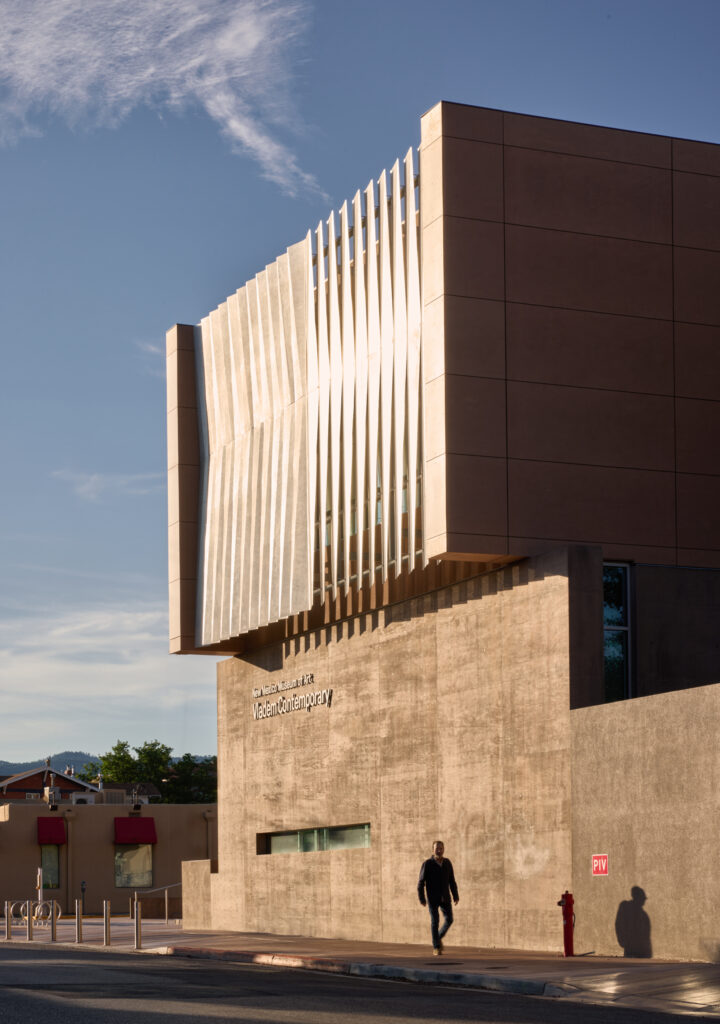
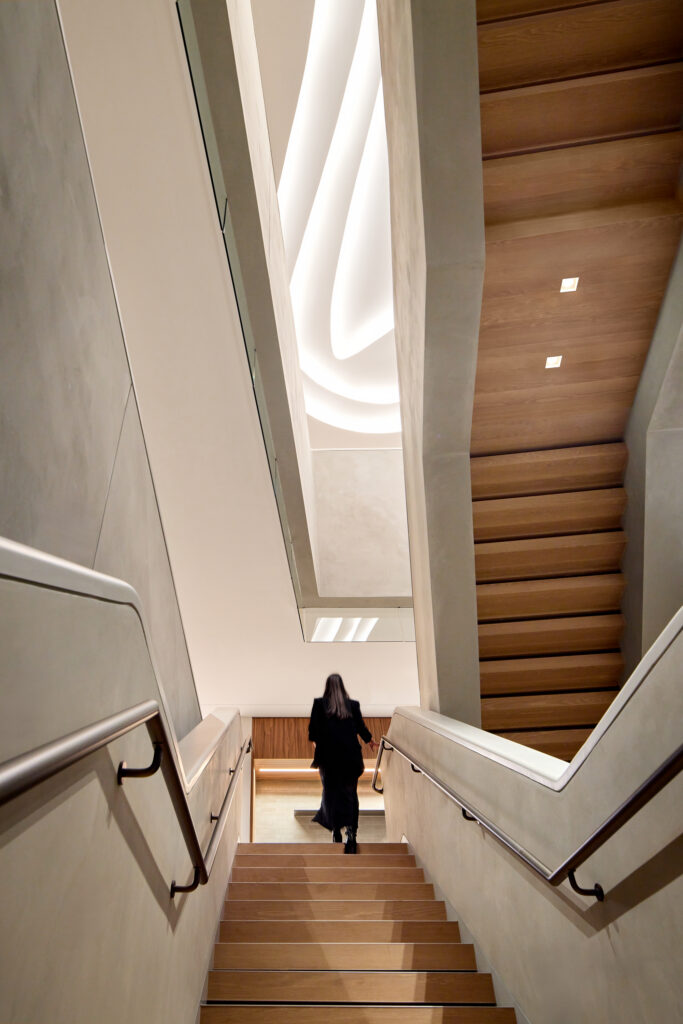
Good stories don’t start with the punchline; they unfold.
While many renderings are composed as hero shots, they are also a product of efficiency. We need to show as much of the design as we can in x number of renderings to fit within x fee schedule. This can push the view toward what Nick Merrick of Hall + Merrick + McCaugherty calls “wide-angle abuse.” I liken it to coughing up the entire design at once. It’s not always wrong, but there’s often a more elegant solution.
Great architectural photography tells the design narrative through discovery and point of view. For this to happen, the designer must let go and let the photographer explore. That means a variety of compositions and focal lengths that result in shoots that read from macro to micro the same way architecture does.
Brad Feinknopf expands on this. “Do not give me a plan with a bunch of carrots in the corners of where the shots are, as it’s almost never where the shots are. Let me know the spaces you want (to shoot), and we will figure out where the shots are in those spaces.”
This doesn’t mean collaboration isn’t part of the process. I think most of us appreciate the collaborative storytelling that happens with the client versus without. This same healthy tension occurs in a studio charette or critique, one where radical candor sets the tone and the best solution rises to the top.
Feinknopf describes a relationship he’s had with a “dear friend and client” he’s worked with for over 30 years, “There is a bunch of friendly banter, but he is a very good designer. We rarely see eye-to-eye on shots. He often says, ‘Brad, the shot is from here,’ to which I reply, ‘Jon, no, it’s not. It’s from here.’ Often, I do it both his way and my way to convince him that I know more about taking photos than he does. He ultimately comes around with much protesting. That said, he is always gracious when he wins AIA awards and always gives me a great deal of credit for his winning so many awards. Many years ago, I was on a shoot with him and an assistant who had never worked with him. Jon was walking around the project saying, ‘I don’t know why I work with this photographer. He has no idea what the hell he is doing.’ My assistant said to me, ‘Why do you work with this asshole?’ I explained that this was Jon just chiding and having fun with me. He definitely didn’t feel that way. I would poke back with, ‘I certainly could be filling my time with shooting something better than this shitty project.’ It’s good when the friendship supersedes the work. It can be fun and collaborative, though there may be teeth pulling.”
Feinknopf has a quote in his signature line that sums up his view of our roles as photographers:
“Photography is more than a medium for factual communication of ideas. It is a creative art.” – Ansel Adams
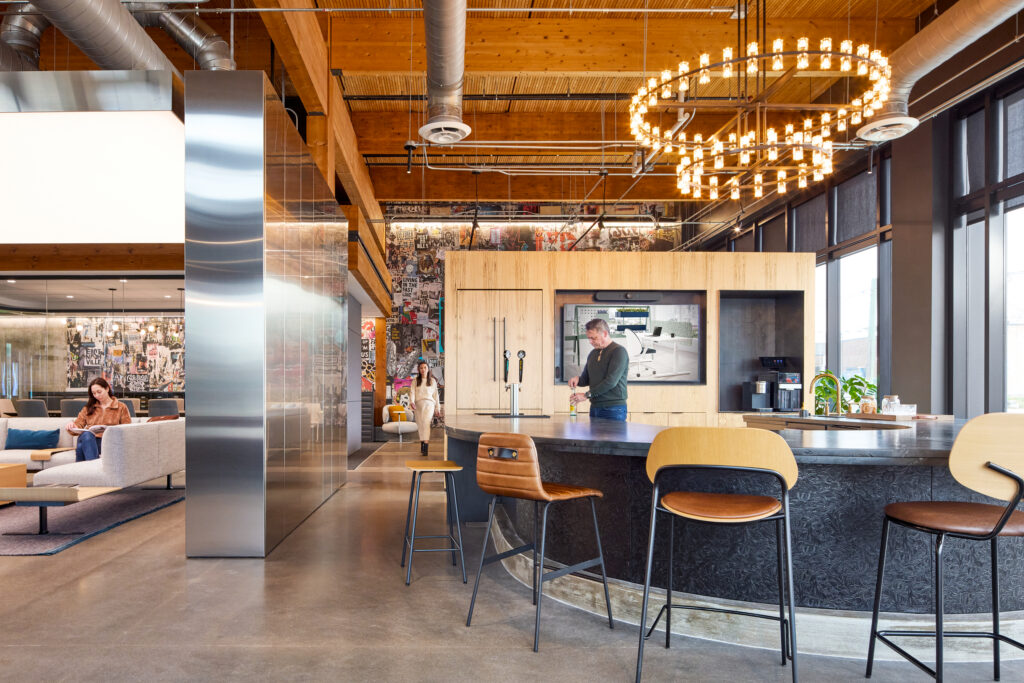
Point-of-view is powerful.
On a recent trip to Santa Fe, I took a five-day workshop with Nick Merrick. Prior to founding his own firm with partner Steve Hall and new partner Kendall McCaugherty, Merrick was a principal photographer for Hedrich Blessing, a photography studio credited with starting the practice of architectural photography that has produced an incredible lineage of photographers. Merrick photographed the Burj Khalifa for Adrian Smith at SOM, if that gives you any indication of the caliber.
It was a joy to listen to Merrick tell the story of Bill Hedrich and Frank Lloyd Wright’s Kaufmann house. Hedrich stood in waders in a stream, capturing one of the most iconic images of any structure ever taken. When delivered, Wright called the image “a little acrobatic.” Maybe he hoped for an image that conveyed a more seamless integration with the landscape than one that read as a feat of architectural and engineering prowess. That image grew on Wright over time, especially after it received national press and helped coin the name “Fallingwater” for Wright’s commission. Had Wright not given Hedrich the creative autonomy to make the images he thought best conveyed the project, that image may never have been made.
So, how do you get the best results?
You get the best results the same way you do with design: communication, collaboration, and trust. Teams complete projects together—fold your photographer in as a part of your team, as a specialist in visual storytelling. Let them know how the project took shape, the concept, and what is important to you. Quit showing up at the shoot without providing the backstory in advance. We have more tools and more opportunities to collaborate than ever. We have laptops and dedicated iPads for the client to view the frame and help place furniture, objects, and people. We have drones that provide unprecedented viewing angles. Yet, even with expanded opportunities and better tools, time is still finite. Give your photographer enough time to explore. 10 to 12 great images are better than 20 okay images. As a design leader, I used to tell my designers that we have two budgets: project budget and project fee. We should spend both in the right place. It reminds me of another quote from Nick Merrick that I’ll paraphrase, “I don’t shoot restrooms.”
Special thanks to the following for their dialogue and contributions to the article.
Nick Merrick, https://www.hallmerrick.com
Brad Feinknopf & Lauren K Davis, http://www.feinknopf.com
Jeffrey Totaro, http://www.jeffreytotaro.com
All images provided courtesy of Stephen Walsh and Maria Ramirez-Walsh, ©2026 RW Collective LLC.