The Science and Soul of Design
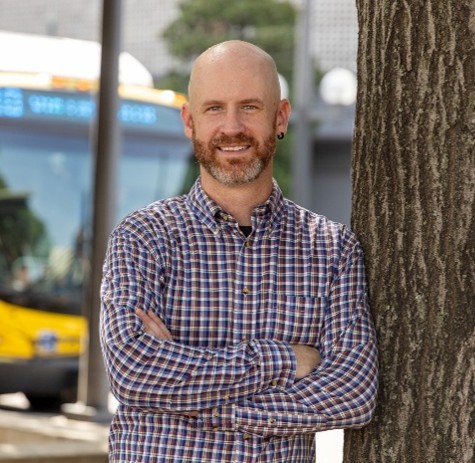
City Planner, City of Dallas
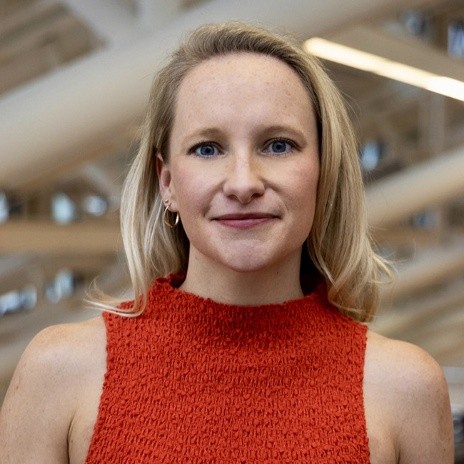
Assistant Professor, WIT

Principal, DLR Group
The first lesson I remember from grad school is this: Everything is gray. There are rarely black-and-white, clear-cut solutions to design problems. That lesson has only been solidified in my professional years. Subjective discourse and the sharing of ideas are foundational in the world of design. While that tenet does not entirely disappear in the professional world, it sometimes seems to take a backseat to the objective realities of time and money.
Through a series of questions, ranging from the definition of beauty to how one’s sense of idealism might shift throughout the course of one’s life, my conversation with Michael Wade, a city planner for Dallas, Katarina Richter-Lunn, a professor and researcher in the greater Boston area, and Charles Brant, principal at DLR Group in Dallas, highlights objective truths and subjective realities, as well as similarities and differences in how one investigates and thinks about this world we are all in.
Why should we care about good design? What value does it bring?
Michael Wade (MW): From the perspective of an anthropologist and urban planner, “good” design elevates the median physical, mental, and emotional health of a society, while affirming the bonds and stories that bestow an identity on that society. Environmental psychologists can measure in cortisol and dopamine levels, as well as heart rate and neural stimulation—the impact of an environment on a user’s body and mind. Walking next to a blank concrete wall will predictably impact the human animal differently than walking by a fine-grained storefront that incorporates fractal ratios and biophilic design principles. The metrics and methods are established, which no amount of philosophy can undo. Modern science etches out where attraction based on novelty ends and lasting well-being begins. These individual impacts produce at scale cultures, which form in response to a society’s physical, economic, and social environment.
Design choices embedded in our built environment have the power to affirm the dignity of every individual in a society or to disgrace them; to welcome everyone into familiar communion or to turn a cold shoulder; to invigorate specific passions or to subdue the human spirit. As we take our adolescent steps into the 21st century, let’s allow the novelty of nameless largesse to fall away and embrace the measurable health, deep dignity, and rich expression that detailed human-scale design bestows upon each of us.
Katarina Richter-Lunn (KRL): The most meaningful design experiences move us without our full understanding of why. They evoke a response that feels immediate and instinctive, operating beneath conscious thought. It is design’s ability to resonate so deeply with people that I distinguish as truly “good.”
Its value lies in its ability to influence how we think, feel, and experience the world around us. Architecture and design shape the environments in which we spend our lives, often affecting us in ways that remain largely invisible. A well-designed space can encourage reflection, reduce stress, foster social connection, or create a sense of belonging. It can support both physical and psychological well-being while enriching everyday experiences.
Charles Brant (CB): As research continues to demonstrate the profound relationship between the built environment and human health, it becomes increasingly clear that design is not simply a matter of aesthetics. Good design is a form of care. It has the capacity to improve quality of life, enhance well-being, and create environments that support people in meaningful and lasting ways.
Good design impacts us all consciously and subconsciously. It evokes emotion and feelings…safety, inspiration, calm. It makes our lives easier and enjoyable. It can have a financial impact by being more energy efficient or increasing productivity. Research shows the quality of a space can impact human learning up to 16%—more than a letter grade for most students.
The opposite is true too; spaces can feel oppressive, cause anxiety, or even fear. Convoluted building layouts and highways frustrate us, create inefficiency, and cost us money.
How has your personal definition of beauty in the built environment changed over the years?
MW: My definition of beauty has changed very little; instead, my main evolution has been in investigating and articulating why and how I find certain environments beautiful. The body knows what it is attracted to or repulsed by. That’s a core physical reality from which some philosophies merely distract us. The visceral experiences of an environment can be described, questioned, considered, compared, and tracked to a patient observer.
This is what led me to urban planning—walking around my college town wondering why certain streetscapes or buildings made me feel how I did. One can parse out the variables unique to one’s life and circumstance from the objective qualities, eventually identifying patterns which end up appearing like the neon green code in “The Matrix.” While a simultaneous muscle of tolerance and open-mindedness has also been exercised over time, no amount of philosophy should muddy the data that one’s body gives them about the built environment.
KRL: As I have moved deeper into both research and design, my understanding of beauty has shifted from “in the eye of the beholder” to, at least in part, rooted “in the eye of science.” Through conducting eye-tracking studies and empirical research, beauty was measured not only through subjective surveys but also through psychophysiological responses; I have come to appreciate that, while individual preferences certainly exist, there are remarkable commonalities in what people perceive as beautiful.
These commonalities emerged through relatively simple elements: scale, proportion, geometry, texture, color, and the relationships between them. Increasingly, evidence suggests that many preferences are connected to evolutionary associations and deeply embedded perceptual tendencies that transcend individual taste.
This does not mean that beauty is entirely objective. Cultural background, personal experiences, and professional training all continue to shape our aesthetic judgments. Beauty will always retain a degree of subjectivity.
What fascinates me most is not the idea that science can define beauty, but rather that it can help us understand why certain spaces move us so profoundly. The more we learn, the more beauty appears to exist somewhere between personal experience and universal human perception, a place where art, psychology, and biology converge.
CB: My appreciation for more architectural styles has increased. In school, the Modernism/Post-Modernism styles appealed to me the most for their deliberate simplicity and focus on the function. As I have gotten older and been able to travel more, I appreciate more variety…for the design, but especially for the craft and ability of the construction without the modern tools and technology that make it easy to design, document, and construct. I find myself in awe of the quality and care that went into those buildings.
Why do some architectural works invoke such strong feelings in people? Why do others have a weaker effect?
MW: Humans are animals trained on the ratios and environments provided by the natural world and craving what neurologists now formally call “fascination.” We are pattern-seeking creatures—escalating to patterns of patterns as found in natural fractal ratios—also responding to breaks in those patterns, which we call “novelty.” The arrangement of patterns and novelty stimulate[s] or deaden[s] our experience of fascination—all defined, measured, and comparable across individuals—and fascination opens the door to meaning.
Meaning, however, is derived from our unique experiences. While we know that adding detail to a residential facade may create a familiar hierarchy of patterns that communicate a dwelling and family life, whether those patterns remind us of a loving household or a negligent one depends solely on our past experiences. A Lutheran church’s tall ceiling may inspire the physical emotion of awe and connection to the divine; our feelings toward the divine will differ. Thus, the space will produce both a predictable experience and a variety of completely and utterly unique emotions. In contrast, spaces which incorporate few patterns, little novelty, and ultimately low fascination potential will close the door on emotional stimulation before it begins. A built environment can set the stage for emotional response; the response itself depends wholly on what a person brings into the interaction.
KRL: As research in neuroaesthetics and neuroarchitecture continues to evolve, we are gaining a deeper understanding of how scale, proportion, contrast, complexity, and materiality influence emotional response.
Throughout history, architects have used these elements to evoke feelings ranging from comfort and intimacy to awe and transcendence. Large scales, dramatic contrasts, intricate detail, and unexpected forms can generate powerful emotional reactions, particularly when combined with a sense of novelty. These experiences often linger in memory precisely because they depart from the ordinary. Consider the experience of visiting the Sagrada Família by Antoni Gaudí. Some people may find it breathtaking, while others may find it overwhelming or even unsettling. Yet few visitors remain indifferent. The building’s ability to provoke a strong emotional response is evidence of its impact.
By contrast, the prosaic house one passes every day may evoke little conscious reaction. However, this does not mean that ordinary architecture possesses less value. Everyday environments shape our lived experience and provide the backdrop against which extraordinary architecture can stand out. The singular and the prosaic are not opposites but complements. Together, they create the balance and contrast that give our built environment richness, meaning, and emotional depth.
CB: Design, art, music, food, etc. are all very subjective to personal taste and appreciation. There are a lot of things that can influence us in the moment we are experiencing a building or space. If we are waiting in a slow-moving line at the DMV, good design might make it better, but it’s still going to be unenjoyable. I saw a match at Allianz Arena (by Herzog & de Meuron—home to Bayern Munich FC), and we walked from the train station to the area right after a storm had come through. The stadium was [lit] up and glowing against the dark thunderclouds in the distance, giving the arena an extraordinary feel and appearance. I remember that approach more than anything that happened on the pitch that night. Maybe if I had visited the stadium many times in a variety of situations I would feel differently about it. It’s not always the design itself that sways our opinion, and sometimes we can’t point to what “thing” is better, but our minds and bodies know it’s better. That can be a challenge when designing for an owner. Whether it’s a house or a commercial building, we can’t always anticipate how it will be received by others.
Tell me about a time when architecture or urban design strongly shaped a memory of yours.
MW: Once upon a time, a girl broke up with me. I asked her to a local brewery to talk it out—I needed some understanding and closure. As is the style of many breweries, we sat on either side of a large wooden table in a large, renovated brick room with concrete floors and ample sight paths. These spaces are created with the illusion that common tables and little privacy will create community. Instead, I felt exposed during this vulnerable conversation. No walls, no change of floor elevation, no fences or railings, and no dark corners to give us a sense of enclosure and safety. The space that was designed to encourage community—and profit—instead shone a bright light on the sorrowful breakdown of communion.
KRL: I find that these experiences occur most acutely when multiple senses are awakened at once, creating a moment that feels larger than any individual design element. I recall attending my first orchestra performance at the Walt Disney Concert Hall, designed by Frank Gehry. The power of the music, the softness of the velvet seating, and the sweeping geometry of the hall combined to create an atmosphere so immersive that it was difficult not to be emotionally affected. It was a reminder that architecture is rarely experienced in isolation; rather, it acts as a vessel through which sound, light, texture, and human activity converge.
Another vivid memory is a visit to the Salk Institute, designed by Louis Kahn, just before sunset. There was something profoundly calming about the space. The rough texture of the concrete walls, the symmetry of the composition, the sound of water moving through the central courtyard, and the shifting interplay of light and shadow across the angular forms all seemed to exist in perfect balance. Every detail, both large and small, felt connected to a greater whole. Standing there, I experienced a sense of calm unlike any I had encountered before in architecture.
Since that moment, I have been driven to understand why certain environments evoke powerful emotional responses and how to recreate aspects of those experiences in places more accessible to everyday life. While we may never fully replicate the serenity of Kahn’s masterpiece, I believe these exceptional works offer important lessons about the relationship between design and well-being. These spaces remind us that architecture is not merely something we see; it is something we feel.
CB: My hometown middle school. Built in 1967, it was a collection of octagons with the space between the “pods” as hallways, lockers, and toilet rooms. You could walk in circles around the central pods without obstruction. Every classroom was wedge shaped, and the only windows were the storefront entryways, which you rarely passed by during the school day. The walls were CMU; ceilings were concrete with spray-applied acoustical treatment. It felt institutional and cold. It did not inspire learning or promote academic performance.
Additionally, I quickly get frustrated in suburban housing developments, especially those from the 1990s and early 2000s. The curving streets become a maze that removes your sense of place and direction. Walls limit access points to the neighborhood, and every street of houses look[s] the same as two streets over. I hate visiting these areas and would avoid living in them at all costs.
Tell me about a time you either compromised your ideals or lost your sense of idealism. What happened and why?
MW: Believe it or not, the main threat to my idealism has been an exaggerated and outsized embrace of open-mindedness. Open-mindedness is an important intellectual and social skill—it allows people of different backgrounds, beliefs, and perspectives to jump into each other’s shoes and grow compassion for one another. However, emotions—including attraction or repulsion—are physical states and do not need to be so readily and permanently muffled in a philosophical pursuit of all perspectives. Our vital energy is rooted in our bodies, but as we exercise intellectual and philosophical pursuits, our prefrontal cortex takes over, hacking away at the connection between our bodies and our minds.
Putting our ego aside momentarily and searching for something to appreciate about a design or space gives us breadth, perspective, and access to new emotions. However, the more I opened my mind to consider designs I found repulsive to actually be beautiful, and then left my mind open, the less direction, identity, and unity I carried into my own creativity. After a time of open-mindedness, one must find a resting place, reform one’s own body of ideals, and move forward. Otherwise, the spirit will be fractured to receive any stimulation at all, and one’s capacity for experiencing beauty will be just a little shallower.
KRL: Thankfully, I have encountered fewer compromises in research than I did in professional practice. This is not to say that design research is free from compromise, but in academia the guiding question often takes precedence over concerns of budget, schedule, or market demands. In practice, there are many occasions when material choices, design ambitions, or core principles must be adjusted to meet the realities of cost, constructability, and time.
One of the most significant compromises I faced occurred while completing my dissertation research at Harvard. My work sought to understand how architectural environments influence stress recovery and well-being. Ideally, I wanted to study these effects at the scale and richness of real architecture. However, empirical research requires a level of control that architecture rarely affords. Unlike many other scientific disciplines, architecture is inherently immersive and multisensory. Our responses to a space are shaped by countless variables occurring simultaneously: light, sound, materiality, movement, social context, and memory, among many others. As a result, I found myself having to compromise on the scale and complexity of the design intervention in exchange for greater experimental control, participant accessibility, and ecological validity. At times, this felt frustrating. The architect in me wanted to capture the full richness of lived experience, while the researcher in me needed to isolate variables carefully enough to draw meaningful conclusions.
Ultimately, I see this not as a loss of idealism but as a negotiation between two ways of understanding the world. Progress in design research often depends on balancing scientific rigor with the complexity of human experience. While neither side achieves everything it wants, the knowledge gained through that compromise can help build a stronger foundation for the future of evidence-based design.
CB: I can’t think of a specific moment personally, but for a huge majority of architects, design ideals are compromised on projects often. It might be because of an owner request or something unexpected about an existing building; most likely, it’s a budget constraint. We typically learn the budget lesson early. It’s rare to be given all the freedoms to be purely design-focused on a project and not have budget as a factor. It’s also those compromises that can create fantastic design by pushing and pulling the design to be what it needs to be.
In asking these questions, I was reminded that both nature—or the personalities we are naturally ingrained with—and nurture—or the education and the environments we place ourselves in—shape the way we view the world. These responses came from specific people in specific circumstances. If I posed those questions to others in similar settings of academia, public sector, or private sector, would the responses be vastly different?
These interviews have been edited for brevity and clarity.