Small Pieces, Big Impact
Architecture is often understood through its larger gestures: form, massing, and spatial organization. Yet the smallest elements often leave the most lasting impression. Among these, tile stands out, operating at both intimate and urban scales, quietly shaping how we experience buildings and cities.
Tiles, small, modular, and often overlooked, have a remarkable ability to turn surfaces into stories. Through color, pattern, and texture, they introduce rhythm, depth, and identity to a façade. What may appear to be a simple repetition of units can, in reality, influence how a building is perceived both up close and from across the city. In this way, tile becomes more than a finish; it becomes a medium through which architecture engages with its context.
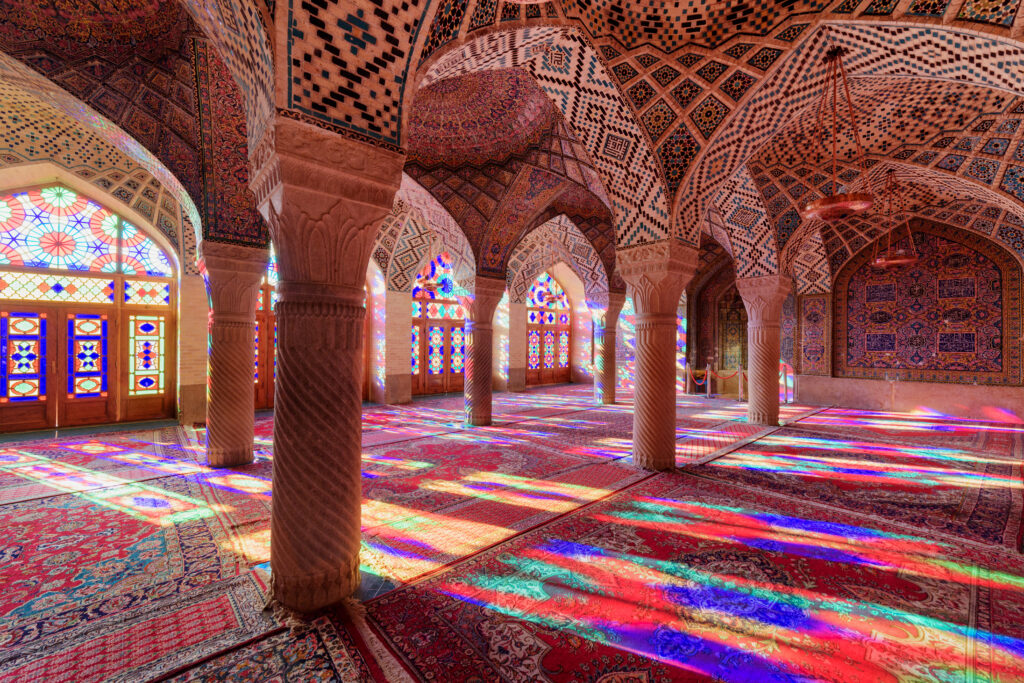
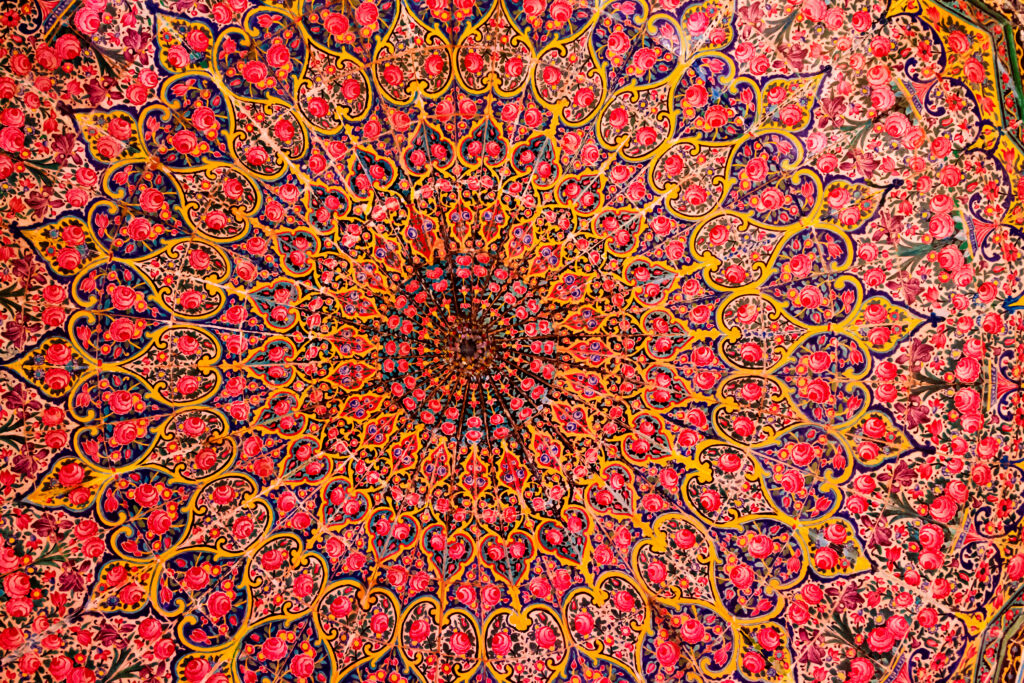
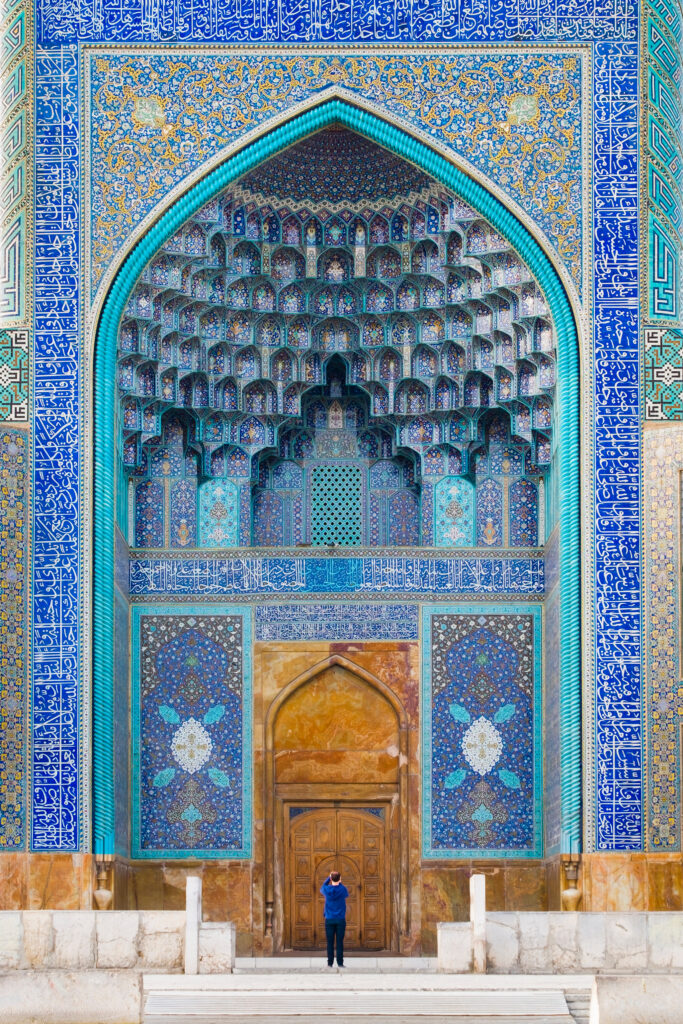
Growing up in Iran, I experienced tile not just as a material but as a cultural language. In cities like Isfahan and Shiraz, tilework is integral to architectural identity. From intricate mosque mosaics to residential façades, these compositions are not merely ornamental; they shape light, guide movement, and create a sense of place. The reflective qualities of glazed surfaces respond to sunlight throughout the day, while geometric patterns establish order, hierarchy, and meaning.
This relationship between tile, light, and identity is especially evident in two iconic examples. The Nasir al-Mulk Mosque in Shiraz, often referred to as the Pink Mosque, demonstrates how tile can transform space through color and light. Its richly patterned ceramic surfaces work in tandem with stained glass to cast shifting colors across the interior, creating an environment that changes with the light throughout the day. In contrast, the Shah Mosque in Isfahan operates at a monumental urban scale. Its extensive use of blue and turquoise tilework defines domes, iwans, and courtyards, using geometry and repetition to create clarity, hierarchy, and a unified architectural language. Together, these examples illustrate how tile can simultaneously shape intimate spatial experiences and establish identity at the scale of the city.
While these strategies are deeply rooted in Iranian architecture, similar ideas have taken on a distinctly local form in Dallas. The Sanger-Harris stores across the Metroplex were defined by vibrant ceramic mosaics—large-scale compositions made from thousands of small tiles. These façades were not applied decoration; they were identity systems. At a time when retail architecture often relied on signage and branding, these buildings stood out through material alone. Color, pattern, and repetition turned otherwise simple volumes into recognizable urban markers, embedding them in the city’s collective memory.

The mosaics also operated across multiple scales. At the pedestrian level, individual tiles offered texture and craftsmanship, something tangible and human. From a distance, those same tiles dissolved into larger compositions, creating bold, graphic expressions that contributed to the visual rhythm of Dallas’s commercial corridors. In this way, tile acted as a bridge between detail and urban scale, reinforcing the idea that small elements, when aggregated, can define an entire streetscape.
The demolition of the Valley View Center mosaic in 2023 marked more than the loss of a building; it erased a piece of Dallas’s visual memory. For many, the mosaic was not just a façade but a landmark, a point of orientation, and a shared reference in everyday experience. Its removal highlights a broader challenge for rapidly growing cities: as redevelopment accelerates, how do we preserve the material identities that give places their character? And what replaces them when they are gone?
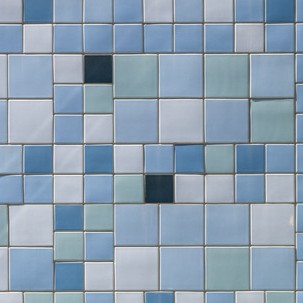
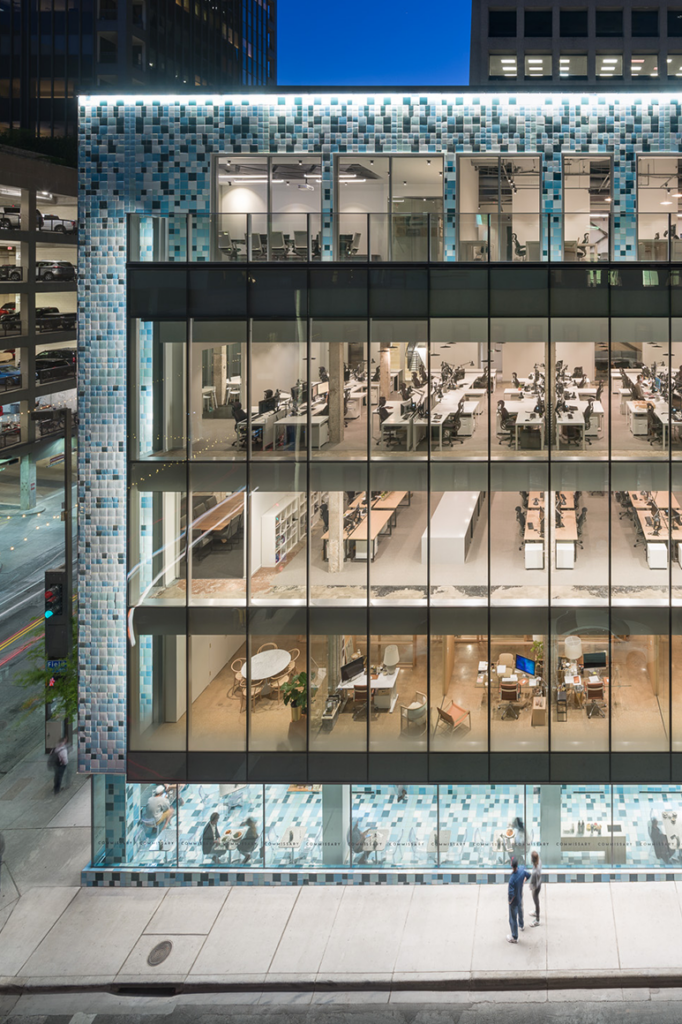
Today, architects in Dallas are revisiting these ideas using contemporary materials and technologies. Projects like 1217 Main Street Renovation, designed by 5G Studio Collaborative, reinterpret tile not as ornament but as an integral architectural system. The gradient ceramic façade introduces movement, depth, and visual continuity, transforming a historic structure into a vibrant urban landmark. Rather than relying on applied graphics or signage, the building establishes its identity through material expression, echoing the legacy of earlier mosaic façades while using a contemporary design language.
Importantly, this approach also re-engages the pedestrian experience. At eye level, the tile provides scale, texture, and variation, inviting closer interaction. At the scale of the city, the gradient reads as a unified surface that contributes to the evolving identity of downtown Dallas. In this sense, the project demonstrates how lessons from the past can inform current practice, showing that detail, when thoughtfully designed, shapes both how a building is experienced and how it is remembered.
Across time and geography, the lesson is consistent: small pieces, when thoughtfully assembled, shape identity at a much larger scale. In a city like Dallas, where growth and change are constant, tile makes clear that details are not secondary to architecture. They are fundamental to how places are formed, recognized, and remembered.